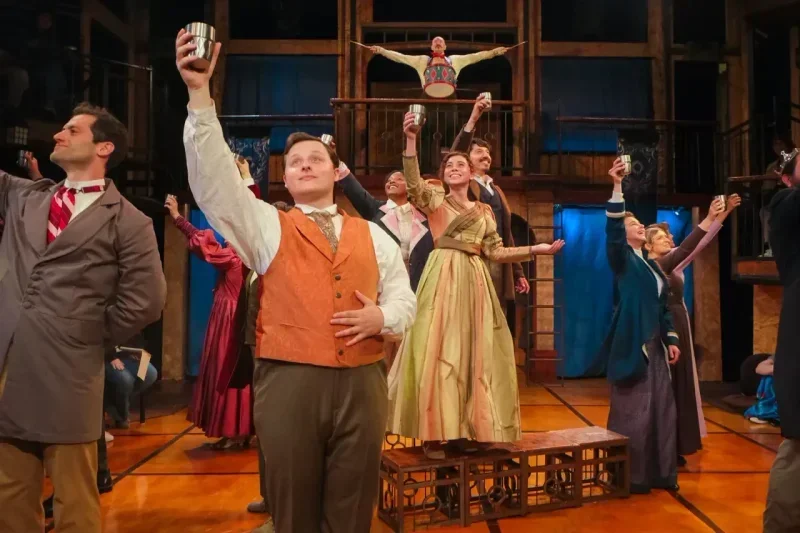
All's Well That Ends Well
Drapery, heraldic detail, and operatic reveal carried this New Swan production between the ceremonial restraint of Roussillon and the warmer theatrical world of Florence.
Curtains as Architecture
This production of All’s Well That Ends Well, directed by Rob Salas, was approached through an operatic lens. Rather than relying on heavy architecture, the design treated curtains as the primary engine of transformation, turning drapery into structure, threshold, and spectacle.
From Roussillon to Florence
In Roussillon, blue drapes and heraldic signage established the French court with clarity and restraint. A pedestal used to present the rings gave the world a ceremonial anchor, something that could return throughout the play and accumulate meaning as the story moved through acts of promise, pursuit, and disguise.
When the action shifted to Florence, the curtains swept back to reveal stucco walls, vines, and topiary elements that instantly warmed the stage. The transition was not just scenic; it changed the emotional temperature of the play, opening a more playful and theatrical environment for romance, deception, and resolution.
Reveal and Conceal
The design lets reveal and conceal do the storytelling. Each movement of the drapery feels precise and charged, carrying the grand, stylized rhythm of opera while still leaving room for actor movement and comedic clarity. The architecture stays intentionally light so the audience can feel the stage changing in front of them.
The result is a world that can move between courtly restraint and Mediterranean warmth without losing coherence. The production photographs show how fabric, signage, and garden detail worked together to create a stage picture that is both elegant and flexible, giving Shakespeare’s shifting worlds a clear visual logic without overbuilding them.
Production Credits
All's Well That Ends Well
Project links
Related project context.
Production pages and writing connected to this scenic design.
Scenic design portfolio


