Angel Street
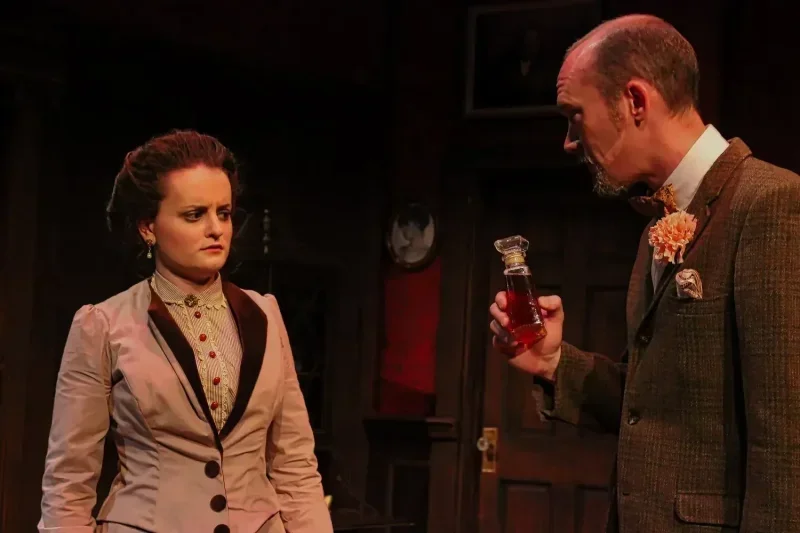
A dense Victorian drawing room for Angel Street, letting domestic realism and psychological unease coexist inside the same controlled interior.
Okoboji Summer Theatre2013
Description
A Victorian drawing room can be beautiful and threatening at the same time. That tension shaped Angel Street at Okoboji Summer Theatre, where domestic polish, period detail, and psychological control needed to exist in the same frame.
Wainscoting, decorative trim, a functional staircase, period furniture, and practical lighting established a formal interior shaped by observation. As the story tightened, the same details that made the room believable also reinforced a growing sense of confinement.
Credits
Written byPatrick Hamilton
Directed byRich Cole
Scenic DesignBrandon PT Davis
Costume DesignAshley Harrison
Lighting DesignChristopher Boew
Sound DesignMichael Burke
Links