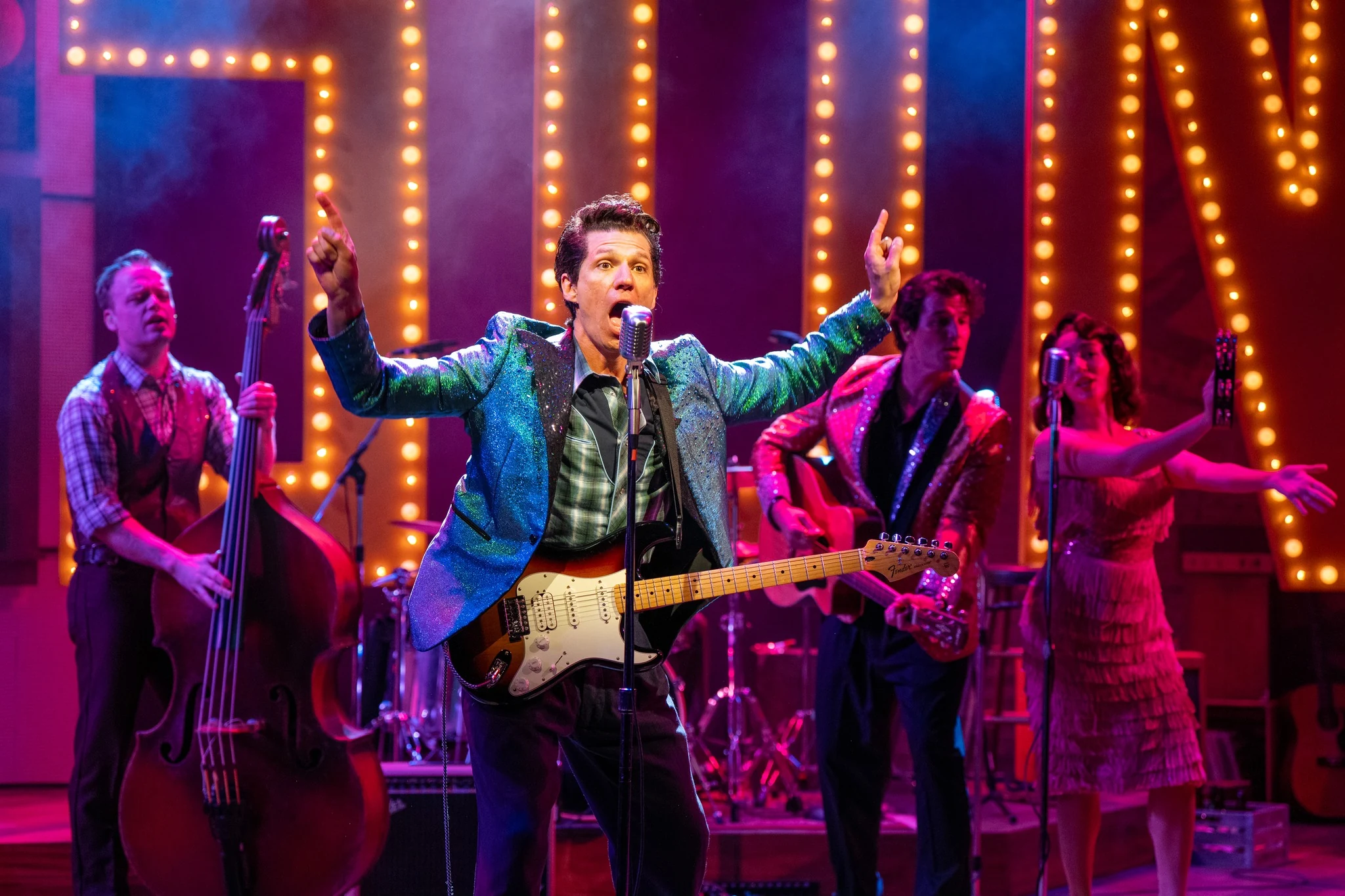

Themed entertainment has always been about environment as narrative. From formal gardens and exposition architecture to today's immersive attractions, each era reveals how designers choreograph space, expectation, and audience movement.
Today’s themed entertainment landscape is being reshaped by rapid technological innovation, shifting consumer expectations, and the blurring boundaries between physical and digital realms. As theme parks, interactive museums, virtual reality experiences, and digital platforms converge, the industry is creating unprecedented opportunities for immersive storytelling—engaging visitors as active participants rather than passive observers.
This exploration traces the evolution of themed entertainment from its earliest origins to the cutting-edge developments shaping its future, revealing how our fundamental desire for escapism, wonder, and shared experiences has remained constant—even as the methods for creating them continue to evolve.
Ancient Civilizations: The First-Themed Spaces

Roman and Greek Gardens of the Elite
In ancient Rome and Greece, elite citizens created elaborate gardens that combined natural beauty with artistic and architectural elements. These spaces were not merely landscaped retreats but carefully designed environments where sculptures, fountains, and mazes created multi-sensory experiences. Serving as places of contemplation, social gathering, and aesthetic appreciation, these gardens offered some of the earliest examples of environmental storytelling.
The Gardens of Sallust: A Public Revolution
The Gardens of Sallust (Horti Sallustiani) represent one of history’s earliest shifts from private to public themed spaces. Developed by the historian Sallust, these gardens featured pavilions, temples, and monumental sculptures that reflected the artistic achievements of the era. When Emperor Tiberius later opened the gardens to the public, it marked a turning point—democratizing leisure experiences previously reserved for the elite.
Medieval Entertainment: Communal Celebrations

The Medieval Fairground
During the Middle Ages, themed entertainment took the form of fairs and festivals that became central to community life across Europe. These vibrant gatherings blended commerce, performance, and celebration, creating immersive social environments filled with musicians, street performers, and vendors. More than marketplaces, medieval fairs served economic, religious, and cultural purposes—laying groundwork for modern communal entertainment spaces.
Pageant Wagons: Mobile Theater Innovation
Pageant wagons were among medieval Europe’s most innovative entertainment forms. These mobile stages featured elevated performance platforms with concealed dressing areas below, allowing theatrical productions to travel between towns. Used primarily for mystery and morality plays, pageant wagons brought storytelling directly to the public—an early model for mobile, location-based entertainment.
Renaissance and Baroque Masterpieces

Italian Renaissance Gardens: Early Themed Environments
From the 14th to 17th centuries, Italian Renaissance gardens evolved into cohesive themed environments. Sites such as Villa d’Este in Tivoli integrated sculpture, water features, and spatial choreography to embody Renaissance ideals of harmony, knowledge, and classical mythology. These gardens functioned as living narratives—early examples of experiential design blending art, nature, and story.
French Formal Gardens: Power and Spectacle
Seventeenth-century France elevated themed environments as expressions of political power. The gardens of the Palace of Versailles, designed by André Le Nôtre, demonstrated how spatial control, symmetry, and scale could communicate authority and cultural dominance. These landscapes established environmental design as a storytelling tool capable of evoking awe and reinforcing ideology.

Pleasure Gardens and World's Fairs
18th–19th Century Pleasure Gardens
European pleasure gardens such as Vauxhall Gardens in London and Tivoli Gardens in Copenhagen transformed public entertainment by combining landscaped environments with concerts, promenades, and fireworks. These spaces welcomed visitors across class lines, establishing a model for inclusive leisure destinations that continues to influence contemporary theme parks.

The Rise of World’s Fairs
World’s Fairs introduced large-scale immersive storytelling through architecture and technology. Beginning with London’s Crystal Palace Exhibition (1851), these exhibitions featured themed pavilions celebrating industrial progress and cultural identity. The 1893 Chicago World’s Columbian Exposition, often cited as the birthplace of the modern amusement park, introduced the Ferris wheel and demonstrated how storytelling, spectacle, and innovation could coexist within a unified experience.
American Theme Park Revolution

From Trolley Parks to Coney Island: The Birth of American Amusement
In the late 19th century, the United States witnessed the emergence of trolley parks and beachside amusement areas, marking a new era in leisure and entertainment. Following Frank Sprague’s 1888 electric trolley invention, transit companies began developing recreational destinations at their line terminals to boost weekend ridership. By 1919, between 1,000 and 2,000 trolley parks operated across America, offering urban residents an escape from industrial life with picnic grounds, pavilions, and eventually carousels and mechanical attractions.
While trolley parks spread nationwide, Coney Island in Brooklyn emerged as the epicenter of amusement innovation. Its transformation from seaside resort to entertainment mecca began in 1895 when Captain Paul Boyton opened Sea Lion Park, America’s first enclosed amusement area to charge admission. This business model established the foundation for future theme parks by creating centralized environments with multiple attractions under unified management.

Inspired by Boyton’s success, George C. Tilyou created Steeplechase Park in 1897, focusing on accessible entertainment designed to provoke laughter and physical interaction. Competition intensified between 1903 and 1904 with the opening of Luna Park and Dreamland, which showcased fantastical architecture and theatrical design. Luna Park dazzled with over a million electric lights, while Dreamland attempted to outshine its rival with refined attractions including Venetian canals and spectacular shows like Fighting the Flames.
These three pioneering venues—Steeplechase, Luna, and Dreamland—established competing visions that continue to influence entertainment design today. Coney Island’s golden age peaked between 1903 and 1911, drawing up to a million visitors on Sundays, before Dreamland was destroyed by fire. Luna Park operated until 1944, while Steeplechase survived until 1964.
The influence of these venues spread rapidly across America as entrepreneurs replicated their success in every major city. Meanwhile, trolley parks flourished until the Great Depression and rising automobile ownership forced most to close by the late 1920s. Of the thousands that once operated, only eleven authentic trolley parks survive today, including Kennywood (1898), Canobie Lake Park (1902), and America’s oldest continuously operating amusement park, Seabreeze Park (1879).
Disney: Redefining Themed Entertainment

Walt Disney forever transformed themed entertainment with the opening of Disneyland in 1955, introducing the revolutionary concept of bringing film stories and characters to life in physical environments. The park’s innovative “Lands” (Fantasyland, Adventureland, etc.) created distinct thematic areas with cohesive architecture, attractions, and experiences that transported visitors to different worlds. Disney’s technological innovations—including Audio-Animatronics and advanced ride systems—established new industry standards. Their integration of media and storytelling created emotionally resonant experiences that connected with visitors on unprecedented levels.
Disney’s themed entertainment concepts expanded globally with parks opening in Florida (1971), Tokyo (1983), Paris (1992), Hong Kong (2005), and Shanghai (2016), along with themed resorts and cruise experiences. This global presence demonstrates Disney’s ongoing influence in setting benchmarks for immersive storytelling and environmental design across the themed entertainment industry.
Universal Studios: Bringing Cinema to Life

Universal Studios evolved from a simple film studio tour in 1916 to a premier themed entertainment destination known for translating cinematic worlds into physical experiences. The company’s transformation into a full-fledged theme park in 1964 established a new model for movie-based attractions.
Signature experiences such as Jurassic Park, The Wizarding World of Harry Potter, and Transformers showcase Universal’s commitment to authentic cinematic world-building through advanced technologies and immersive environments that blur the boundaries between fiction and reality.
Universal’s global expansion includes parks in the United States, Japan, Singapore, and Beijing, each offering culturally relevant experiences while maintaining the brand’s cinematic storytelling focus.
Cedar Fair and Six Flags: Thrill-Seeking Destinations

Cedar Point | Sandusky, OH
Cedar Fair, beginning with Cedar Point’s founding in 1870, has developed into a leading amusement park company known for world-class roller coasters and water attractions. Its portfolio includes Cedar Point, Kings Island, Knott’s Berry Farm, and other major properties offering diverse experiences for thrill-seekers and families alike.
Six Flags, founded in 1961, has defined itself through high-thrill experiences and attractions across North America. Known for record-breaking roller coasters and innovative rides such as Justice League: Battle for Metropolis, Six Flags has successfully leveraged brand partnerships with DC Comics and Warner Bros. to create character-driven experiences.
21st Century Innovations
Meow Wolf and Evermore Park: Boutique Immersion
The 21st century has seen the rise of boutique immersive experiences that prioritize active participation and open-ended storytelling. Meow Wolf, established in 2008, has reimagined art galleries as interactive narrative environments, with installations such as The House of Eternal Return blending art, technology, and storytelling in ways that encourage exploration and discovery.

Evermore Park, opened in 2018, represents another innovative approach as a “living” theme park where interactive fantasy experiences unfold through themed seasons with evolving storylines and characters. By merging theme park elements with interactive theater, Evermore creates experiences where visitors become active participants rather than passive observers.

The Rise of Location-Based Entertainment (LBE)
The location-based entertainment market has emerged as one of the fastest-growing segments within themed entertainment, valued at approximately $5.63 billion in 2024 and projected to grow at a 28.5% CAGR through 2030. This growth reflects consumers’ increasing desire for immersive, interactive experiences that cannot be replicated at home.
Major entertainment companies are responding to this trend, with Universal expanding into location-based attractions in Las Vegas and Texas that operate independently from traditional theme parks. Retail and hospitality sectors are also embracing immersive entertainment, exemplified by destinations such as AREA15 in Las Vegas.

Technology Transformation: AR, VR, and Mixed Reality
Advancements in augmented reality (AR), virtual reality (VR), and mixed reality (MR) technologies are revolutionizing themed entertainment experiences. The global immersive technology market is expected to grow from $21.66 billion in 2021 to $134.18 billion by 2030, reflecting how these technologies are transforming storytelling and audience engagement across the industry.
Theme parks and attractions are increasingly incorporating these technologies to enhance traditional rides and create entirely new experiences. Universal Studios’ Mario Kart: Bowser’s Challenge combines physical sets with AR headsets to create an interactive racing experience, while various location-based VR centers are offering experiences that would be impossible in the physical world alone. This blending of physical and digital elements allows for more dynamic, personalized, and responsive attractions that can be updated and refreshed without major physical renovations.
IP Integration and Cross-Media Experiences
The well-known “flywheel” model pioneered by Disney is gaining traction throughout the themed entertainment industry, with franchise intellectual property (IP) being brought to life through a wide range of in-person experiences. Entertainment companies are expanding engagement by creating physical manifestations of popular film, television, gaming, and streaming content. This trend extends beyond traditional theme parks to include branded entertainment districts, pop-up experiences, live performances, and interactive exhibitions.
Video game companies have become particularly active in this space, with Nintendo partnering with Universal for Super Nintendo World at Universal parks worldwide, and companies like Ubisoft creating location-based VR experiences based on their game franchises. Even streaming services are beginning to explore physical extensions of their content, creating new opportunities for audiences to engage with familiar stories and characters in immersive, spatial ways.

Entertainment Ecosystems and the Experience Economy
By 2025, themed entertainment is evolving from standalone attractions into integrated entertainment ecosystems that offer multiple touchpoints across both physical and digital spaces. The boundaries between theme parks, retail, dining, hospitality, and digital entertainment continue to blur as companies create comprehensive branded environments where every element contributes to the overall storytelling experience.
This shift aligns with broader changes in consumer behavior, as visitors increasingly value unique experiences over material possessions. Industry research suggests that brands prioritizing entertaining and immersive content are capturing greater audience attention and market share. This “experience economy” focuses on creating memorable moments that forge emotional connections with visitors, emphasizing personalization, interactivity, and multi-sensory engagement that cannot be replicated through digital channels alone.

Conclusion
The evolution of themed entertainment—from the private gardens of ancient elites to today’s immersive, technology-driven environments—reveals a consistent human desire for wonder, escape, and shared experience. While the tools and technologies have changed dramatically, the core impulse remains the same: to step into spaces that tell stories, evoke emotion, and momentarily transport us beyond the everyday.
What distinguishes the current moment is the convergence of multiple forces shaping the industry at once. Technological advancements are enabling new forms of immersion and interactivity; intellectual property is increasingly leveraged across physical and digital platforms; and consumer preferences are shifting toward experiences that feel personal, participatory, and socially meaningful. Together, these forces are transforming themed entertainment from isolated attractions into interconnected ecosystems.
The projected growth of the location-based entertainment market to $23.34 billion by 2032 underscores continued confidence in physical experiences, even in an increasingly digital world. Rather than replacing in-person entertainment, virtual and augmented technologies are enhancing it—creating hybrid environments that blend tactile space with digital storytelling.
Looking ahead, themed entertainment is likely to continue expanding beyond traditional parks into mixed-use developments, cultural spaces, retail environments, and everyday public settings. The most successful experiences will not be defined by scale alone, but by their ability to create emotional resonance—through thoughtful storytelling, meaningful participation, and multi-sensory engagement that cannot be replicated through passive media.
From the Gardens of Sallust to today’s immersive worlds, themed entertainment has always reflected how societies imagine leisure, power, culture, and community. Its continued evolution suggests not an endpoint, but an ongoing reinvention—one shaped by technology, creativity, and a deeply human desire to experience stories together, in space.
Frequently Asked Questions
What was the earliest form of themed entertainment?
While the term “themed entertainment” is modern, ancient Roman and Greek gardens—such as the Horti Sallustiani (Gardens of Sallust)—represent some of the earliest purposefully designed leisure environments. These spaces combined architecture, sculpture, and landscape design to create cohesive, immersive experiences centered on social interaction and aesthetic pleasure.
How did Disney change the definition of a theme park?
Disney fundamentally redefined themed entertainment by introducing cohesive narrative “Lands,” integrating storytelling across architecture and attractions, and pioneering technologies such as Audio-Animatronics. This approach transformed amusement parks from collections of rides into fully realized story-driven environments.
What role did World’s Fairs play in shaping modern themed entertainment?
World’s Fairs established many foundational principles of themed entertainment, including large-scale immersive environments, architectural spectacle, and the integration of technology with storytelling. The 1893 Chicago World’s Columbian Exposition is especially influential, often cited as a precursor to the modern amusement park.
How are immersive experiences different from traditional theme parks?
Immersive experiences—such as those created by Meow Wolf or Evermore Park—often prioritize open-ended exploration, audience agency, and narrative participation over rides or fixed paths. These experiences blur the line between art installation, theater, and themed environment, offering more personal and interpretive forms of engagement.
What is the difference between an amusement park and a theme park?
Amusement parks primarily focus on rides and mechanical attractions, while theme parks organize experiences around unified themes or narratives. In theme parks, architecture, attractions, food, retail, and entertainment work together to support environmental storytelling.
Why is location-based entertainment growing so quickly?
Location-based entertainment (LBE) is growing rapidly because it offers social, physical experiences that cannot be replicated at home. From VR arcades and escape rooms to immersive art installations and themed dining, LBE responds to consumer demand for shared, memorable experiences in physical space.
How is technology reshaping themed entertainment today?
Technologies such as augmented reality, virtual reality, and mixed reality are expanding what themed environments can do. These tools allow attractions to layer digital content onto physical spaces, personalize experiences, and refresh storytelling without extensive physical reconstruction.
How are video games influencing themed entertainment design?
Video games influence themed entertainment by emphasizing interactivity, player agency, and world-building. Attractions like Super Nintendo World translate game mechanics into physical space, while location-based VR experiences allow audiences to inhabit digital worlds collaboratively.
Is themed entertainment only about theme parks?
No. While theme parks remain a central pillar, themed entertainment now extends into museums, retail environments, hotels, restaurants, cruise ships, exhibitions, and mixed-use developments. As storytelling and experience design become more central to how brands engage audiences, themed entertainment principles are increasingly applied across everyday spaces.


