
Minimalism in scenic design is not about doing less work. It is about making more precise choices so the environment can shift quickly, hold focus, and support story under the real constraints of regional production schedules.
The 2024-2025 season also signals growth in theatre productions, a promising sign of recovery. American Theatre magazine reported 1,560 productions at 558 TCG member theatres in 2023-2024, up from 1,298 the year before. Though the numbers still trail pre-pandemic levels, early announcements for this season show a stronger lineup of performances. They reflect the theatre community's resilience and creativity.
Why Minimalism Works
Minimalist scenic design remains a favorite in regional theatres for a good reason:

- Flexibility: Touring shows and shared venues need designs that adapt to different stages.
- Story-First Approach: Stripping down the set keeps the focus on the narrative and performances.
- Cost-effective: Simple sets free up budgets for lighting, costumes, or other creative elements.
- Room for Creativity: Constraints spark innovation, pushing designers to think outside the box.
Scenic Design Trends for 2025
This season, theatres are embracing a range of strategies to make minimalist designs even more impactful:

- Printed Backdrops: Low-cost scenic surfaces that establish location quickly and support touring or multi-location shows.
- Projection Mapping: Dynamic environments that shift with story beats without requiring major physical scene changes.
- Sustainable Materials: Recycled and reusable scenic components that reduce waste and support responsible production practices.
- Modular Set Pieces: Reconfigurable units that speed transitions and adapt to tight stage footprints.
- LED Technology: Programmable visual layers that add depth, atmosphere, and flexibility for designers.
2025’s Most Produced Shows and Their Scenic Needs
Looking at the top productions of the year, it’s clear how minimalist design enhances their storytelling. Here’s a deeper look at the top 10 plays and musicals, with playwright credits, production numbers, and notable venues:
What the Constitution Means to Me by Heidi Schreck [16 productions]
- Venues: Berkeley Repertory Theatre, Steppenwolf Theatre
- Set: A straightforward debate hall.
- Impact: Keeps the focus on personal and political themes.
Fat Ham by Jame Ijames [14 productions]
- Venues: Yale Repertory Theatre, Wilma Theater
- Set: A backyard barbecue.
- Impact: Highlights the play’s reimagined take on Hamlet’s themes in a modern setting.
King Jame by Rajiv Joseph [14 productions]
- Venues: Center Theatre Group, Steppenwolf Theatre
- Set: Intimate, realistic settings such as living rooms and sports bars.
- Impact: Grounded, realistic design keeps the focus on character dynamics
Primary Trust by Eboni Booth [13 productions]
- Venues: Roundabout Theatre, Guthrie Theater
- Set: Minimal, evocative spaces that shift subtly.
- Impact: Creates a whimsical but grounded atmosphere for introspection.
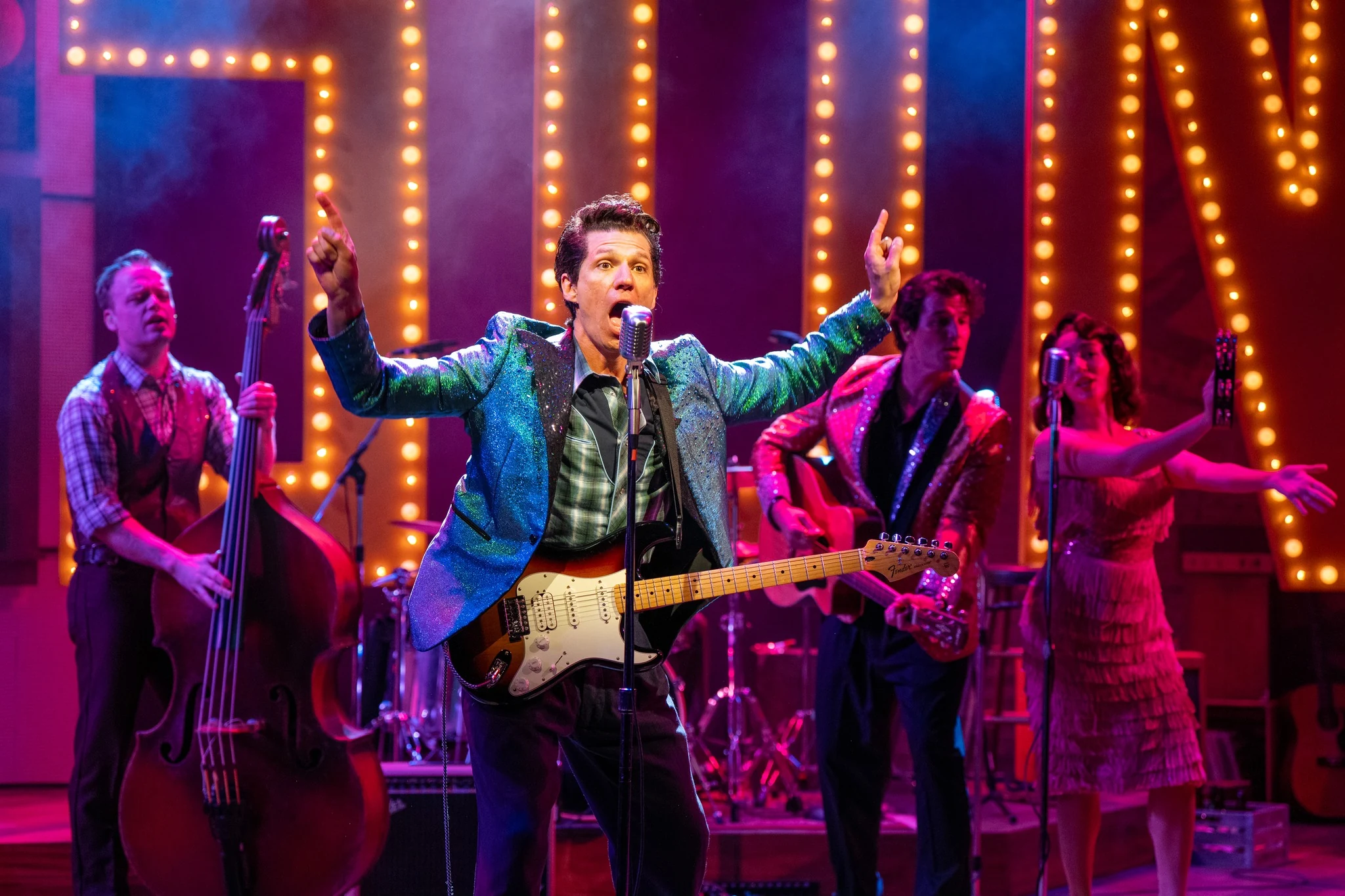
Jersey Boys by Marshall Brickman & Rick Elice [11 productions]
- Venues: Paper Mill Playhouse, Dallas Theater Center
- Set: Modular platforms with sleek backdrops.
- Impact: Matches the concert-style energy of the show.
Waitress by Jessie Nelson [11 productions]
- Venues: Signature Theatre, Ogunquit Playhouse
- Set: A diner with counters and booths.
- Impact: Rooted in a few iconic pieces, with lighting adding depth.
Ms. Holmes and Ms. Watson – Apt. 2B by Kate Hamill [10 productions]
- Venues: Cincinnati Playhouse, Hartford Stage
- Set: Versatile, playful interiors.
- Impact: Supports the comedic, fast-paced tone of the adaptation.
Dracula: A Feminist Revenge Fantasy by Kate Hamill [9 productions]
- Venues: Portland Center Stage, Cleveland Playhouse
- Set: Gothic and symbolic, often leveraging minimal yet evocative staging.
- Impact: Enhances the bold reinterpretation of the classic tale.
The Play That Goes Wrong by Henry Lewis, Jonathan Sayer, and Henry Shields [9 productions]
- Venues: Cleveland Playhouse, Pasadena Playhouse
- Set: A deceptively simple design with precise technical elements.
- Impact: Adds chaos and humor.
The Wolves by Sarah DeLappe [9 productions]
- Venues: Studio Theatre, The Old Globe
- Set: A minimalist indoor soccer field.
- Impact: Highlights the raw emotional intensity of the players’ stories.
Where Minimalism Gives Way to Complexity
Many productions favor minimalist scenic design. Yet, some shows need a more elaborate approach to tell their stories. These exceptions highlight the diversity of scenic design and the need for flexibility in the craft.
The Play That Goes Wrong
Why It Stands Out: What seems simple is actually a highly technical set designed to "fail" in specific ways. This requires meticulous planning and construction to execute the comedic disasters seamlessly.
Jersey Boys
Why It Stands Out: While sleek and modular in concept, its concert-style aesthetic calls for dynamic lighting, projections, and staging that elevate it beyond minimalist norms.
Dracula: A Feminist Revenge Fantasy
Why It Stands Out: Gothic and symbolic staging, often with layered scenic elements, creates a bold and visually striking reinterpretation of the classic tale.
These productions show that even in a season dominated by minimalism, there’s room for scenic designs that push boundaries and embrace complexity.
Creativity with Constraints
Minimalist scenic design doesn’t limit creativity—it inspires it. Designers are finding new ways to:
- Use projections and lighting to create expansive worlds.
- Develop modular elements for seamless transitions.
- Engage the audience’s imagination to fill in the details.
This trend also aligns with sustainability efforts, as minimalist sets often use fewer materials and are easier to repurpose.
Resources for Scenic Designers
For those looking to incorporate the latest trends and technology into their scenic designs, here are some helpful companies and tools:
Vectorworks: Industry-standard software for creating detailed scenic designs and integrating 3D modeling. Learn more.
Twinmotion: A powerful tool for real-time rendering and visualization. Learn more.
ETC (Electronic Theatre Controls) : offers advanced, minimalist lighting solutions that integrate with modular designs. Learn more.
Rosco: Specialists in scenic painting, backdrops, and projection technology. Learn more.
Encore Scenic Studio: Providers of high-quality printed backdrops for theatre and events. Learn more.
These resources can help scenic designers realize their creative visions while staying on trend and meeting the practical needs of modern theatre.
Frequently Asked Questions
Frequently Asked Questions
Why is minimalist scenic design so common in regional theatre right now?
Minimalist design adapts easily across venues, keeps construction costs manageable, and gives directors flexibility while protecting story clarity.
Does minimalist scenic design mean lower production value?
No. Strong minimalist design uses composition, texture, lighting, and transitions intentionally, often feeling more focused and theatrical than oversized builds.
How do projections fit into minimalist scenic design?
Projections can create place, rhythm, and visual transformation quickly, helping smaller physical builds support multiple locations without heavy scene shifts.
What materials support both minimalism and sustainability?
Modular platforms, reusable framing systems, re-skinned scenic surfaces, and low-waste fabrication methods all support fast reuse and cleaner production cycles.
What should designers prioritize when pitching minimalist concepts?
Show how the design supports storytelling, actor movement, and technical feasibility first, then demonstrate how visual restraint increases impact.
Looking Ahead
Audiences are valuing storytelling over spectacle, and minimalist design meets that demand. This isn’t just a practical choice; it’s an opportunity for designers to craft meaningful, evocative spaces that support the narrative. Minimalism is more than a trend—it’s a creative philosophy that’s shaping the future of scenic design


