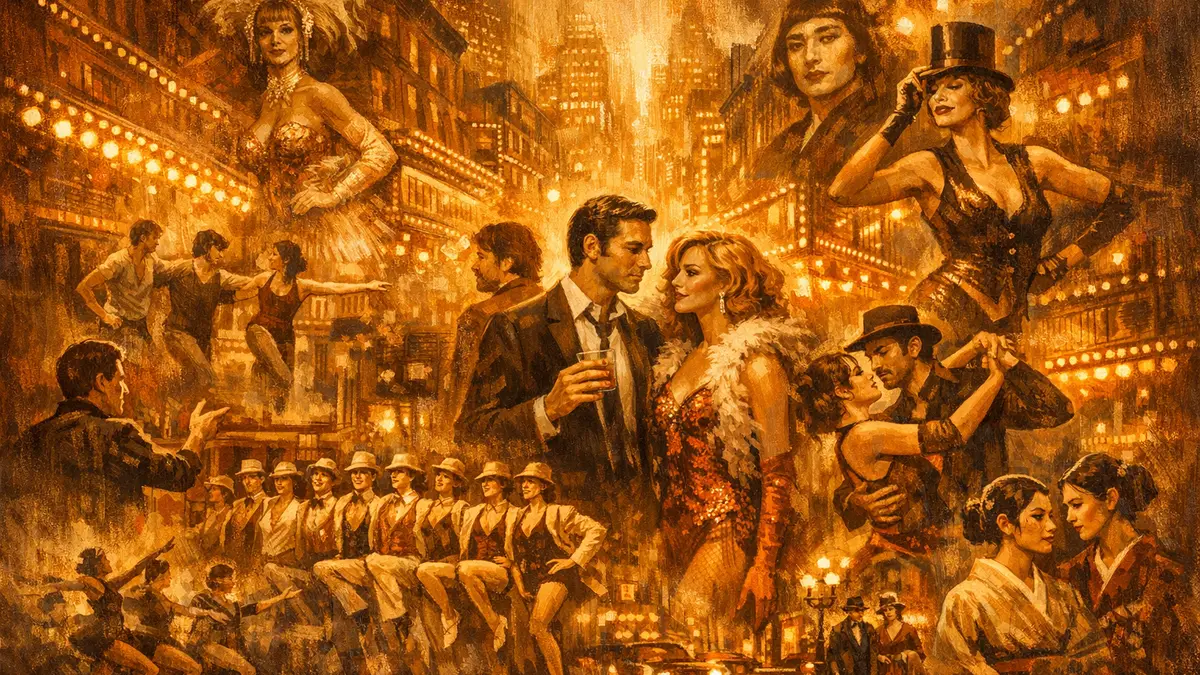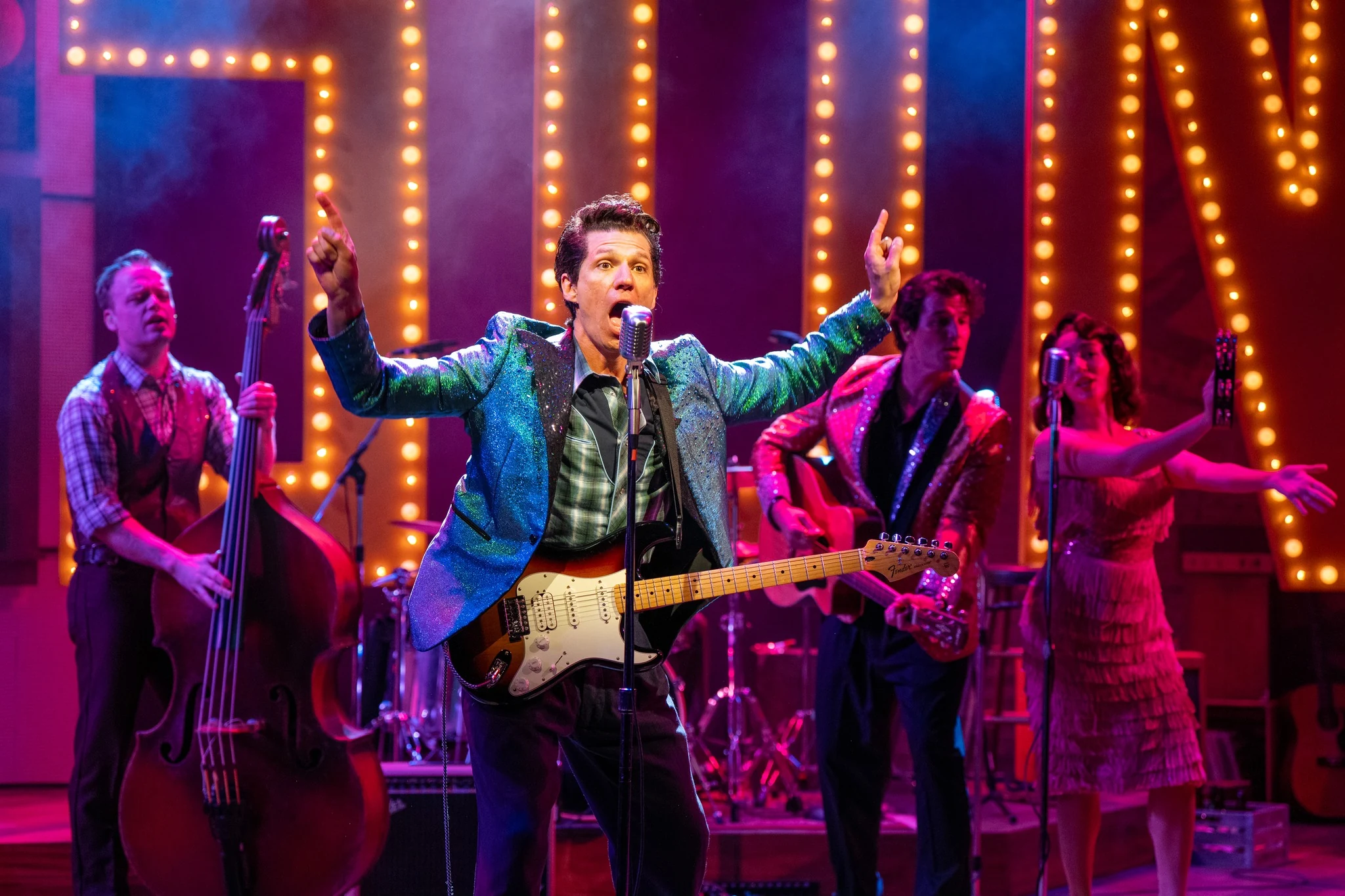

The Golden Age of Broadway is often discussed through scores and librettos, but its scenic language was equally foundational. Designers built repeatable visual systems that helped musicals move with narrative clarity and emotional precision.
Social Change and the Birth of the Golden Age

The Golden Age of Broadway, spanning from the 1940s to the 1960s, emerged against the backdrop of significant social, economic, and cultural shifts in the United States. The aftermath of the Great Depression, World War II, and the postwar economic boom created an atmosphere ripe for artistic innovation. Americans sought entertainment that reflected their changing world—stories that resonated with their struggles, aspirations, and newfound optimism.
Broadway responded with a new era of musicals that integrated music, story, and dance into cohesive theatrical experiences. Themes of love, identity, and social responsibility were explored in ways never before seen on stage, making Broadway not just a form of escapism, but a mirror of American life.
Oklahoma!: The Birth of a New Musical Era
Oklahoma! (1943) marked a revolutionary moment in musical theatre. As the first collaboration between Richard Rodgers and Oscar Hammerstein II, the show integrated music, dance, and storytelling in an unprecedented way.
The production is widely credited with popularizing the term “11 o’clock number,” referring to a climactic song near the end of the second act—a structural device that became a Broadway staple. Additionally, the dream ballet choreographed by Agnes de Mille introduced a new way of using dance to convey emotion and narrative depth, pioneering what became known as the dance ballet in musical theatre.
This innovative integration of dance and song fundamentally reshaped how stories could be told on stage and became a defining feature of the Golden Age.
Musical Contributions and Terminology
11 O’Clock Number: A powerful song near the end of a musical that serves as an emotional or narrative climax. Oklahoma! helped solidify this structure.
Dance Ballet: Agnes de Mille’s dream ballet used movement to express characters’ inner thoughts and emotions, rather than functioning solely as entertainment.
Integrated Musical Format: Songs and dances advanced the plot and deepened character development, replacing standalone musical numbers.
Modern Musical Theatre Structure
The innovations of the Golden Age laid the foundation for the structure of modern musical theatre. While contemporary shows have expanded and reinterpreted this framework, many still follow a format established during this era.
Common structural elements include:
- Opening Number – Introduces the setting, tone, and major themes
- “I Want” Song – The protagonist expresses their desires and motivations
- Act One Finale – A dramatic turning point leading into intermission
- 11 O’Clock Number – A climactic moment near the end of Act Two
- Finale – Resolves the narrative, often reprising key musical themes
This structure remains visible in works such as Les Misérables, Wicked, and Hamilton, which combine Golden Age principles with modern storytelling techniques.
Key Productions and Innovation
Beyond Oklahoma!, several landmark productions defined the Golden Age by pushing artistic boundaries through storytelling, choreography, and musical complexity.
Defining Golden Age Productions
Carousel (1945) tells a deeply emotional story of love and redemption, following Billy Bigelow and Julie Jordan. It remains especially notable for "Soliloquy" and "You'll Never Walk Alone."
South Pacific (1949), set during World War II, confronted racial prejudice and cultural conflict through songs like "Some Enchanted Evening."
The King and I (1951), based on the story of Anna Leonowens and the King of Siam, blends cultural exchange with iconic numbers such as "Getting to Know You."
West Side Story (1957) reimagines Romeo and Juliet through choreography by Jerome Robbins and music by Leonard Bernstein, redefining realism and movement in musical theatre.
The Sound of Music (1959) is a Rodgers and Hammerstein classic blending family, resistance, and song, later cemented through its film adaptation.
Fiddler on the Roof (1964) explores tradition and change in Tsarist Russia while balancing cultural specificity with universal themes of family and identity.
Each of these productions expanded what musical theatre could address—emotionally, socially, and structurally.
Important Figures of the Golden Age
Several artists played key roles in shaping this transformative period:
- Richard Rodgers & Oscar Hammerstein II – Pioneers of story-driven musical theatre
- Leonard Bernstein – Composer blending classical, jazz, and Latin influences
- Jerome Robbins – Choreographer/director who used dance as narrative language
- Cole Porter – Known for sophisticated lyrics and musical wit
- Frank Loesser – Composer of character-driven, comedic musicals
- Bob Fosse – Choreographer whose stylized movement reshaped Broadway dance
The Legacy of the Golden Age
The Golden Age established narrative-driven musical theatre as the dominant Broadway form—a legacy still felt today. From contemporary revivals to modern works like Hamilton, today’s productions build on foundations laid during this period.
Understanding the Golden Age is not about nostalgia. It is about recognizing the structures, themes, and artistic risks that continue to define musical theatre on stage and screen
Frequently Asked Questions: The Golden Age of Broadway
Frequently Asked Questions
What is considered the Golden Age of Broadway?
The Golden Age of Broadway generally refers to the period from the early 1940s through the mid-1960s, when musicals emphasized integrated storytelling, character-driven songs, and cohesive production design.
Why is Oklahoma! considered so important?
Oklahoma! (1943) is widely seen as the first fully integrated musical, where songs, dance, and dialogue all advanced the narrative. Its success helped establish a new standard for musical theatre structure and storytelling.
What does “integrated musical” mean?
An integrated musical is one in which songs and choreography are essential to the plot and character development, rather than functioning as standalone entertainment. This approach became a defining feature of the Golden Age.
What is an “11 o’clock number”?
The 11 o’clock number is a climactic song that occurs late in the second act, often marking a character’s emotional turning point or resolution. While the term predates Oklahoma!, the show helped popularize and standardize its use.
Did Golden Age musicals address serious themes?
Yes. While often remembered for romance and spectacle, many Golden Age musicals explored complex issues such as prejudice, tradition versus change, personal responsibility, and social identity.
How did choreography change during the Golden Age?
Choreography became a storytelling tool rather than decorative movement. Artists like Agnes de Mille and Jerome Robbins used dance to reveal psychology, advance plot, and establish tone.
Why does the Golden Age still matter today?
The narrative structures, musical forms, and thematic ambitions developed during the Golden Age continue to shape contemporary musical theatre. Even modern works that break from tradition often do so in conversation with Golden Age conventions.