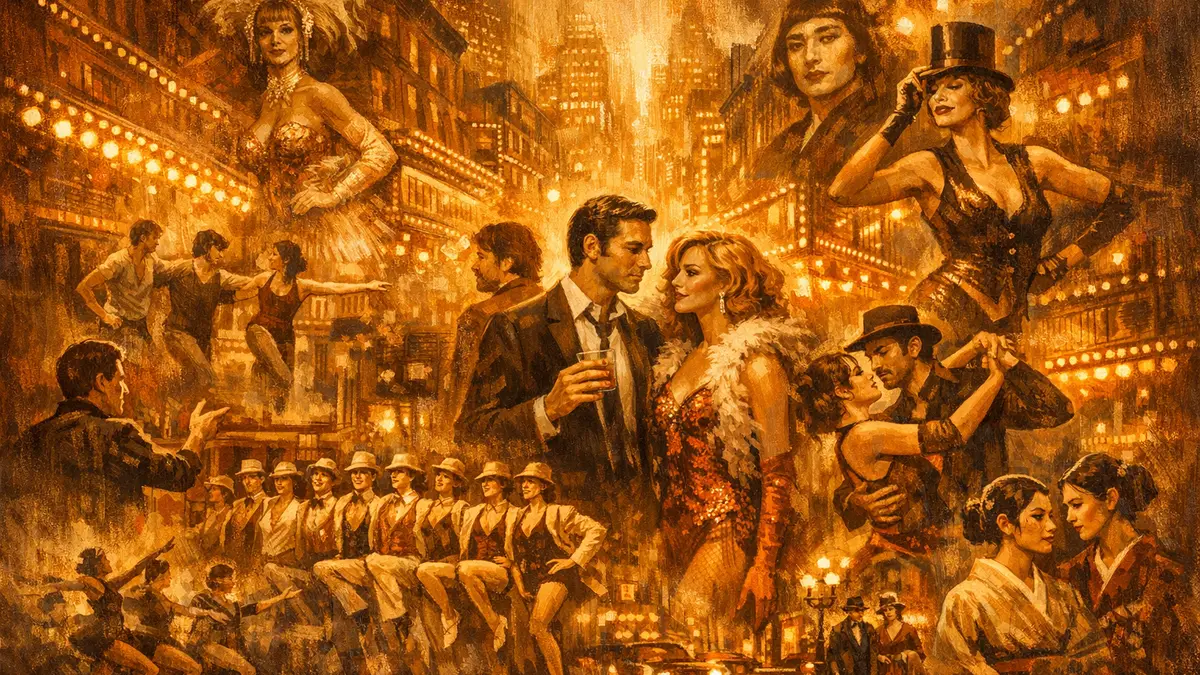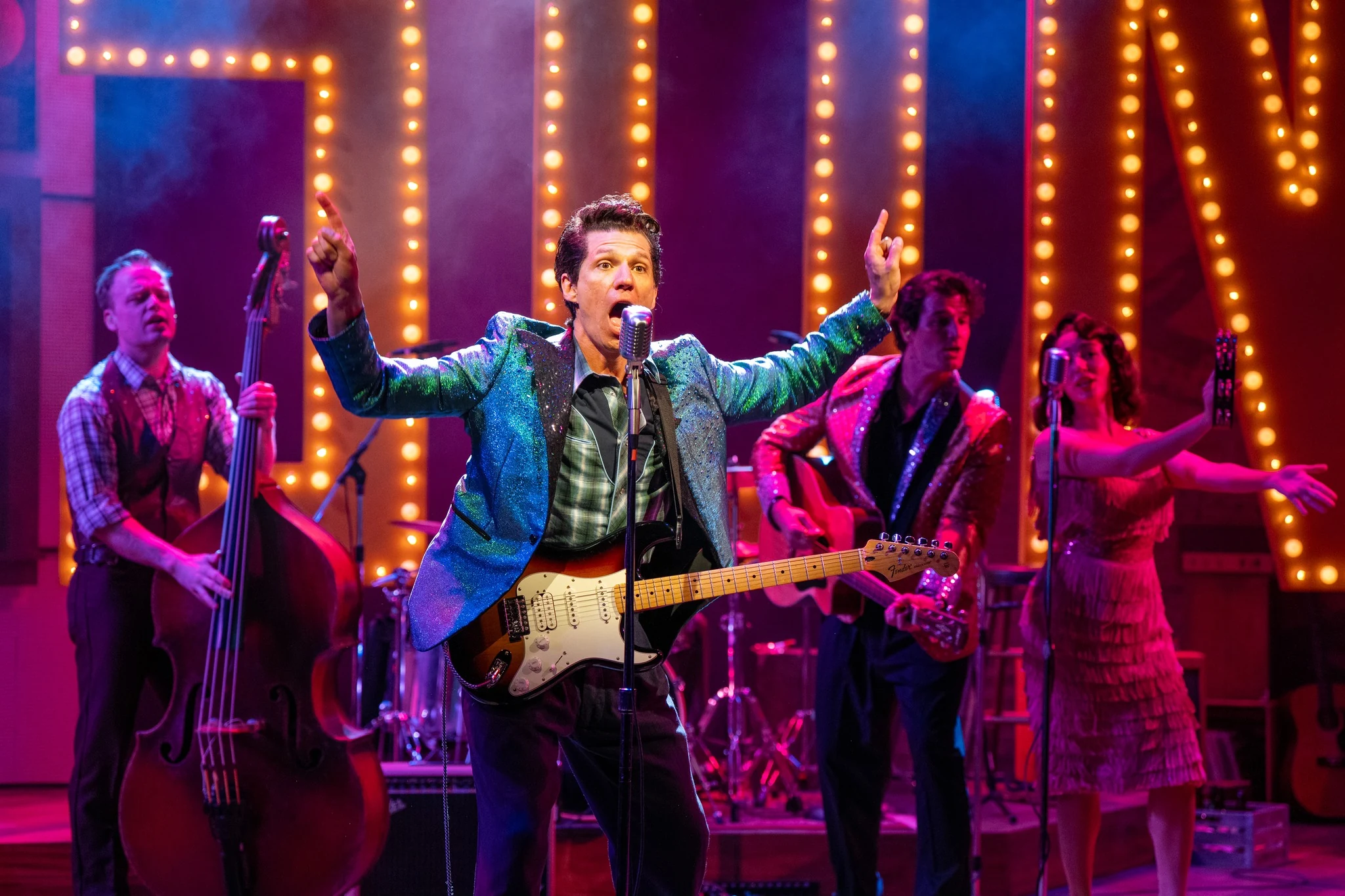

Golden Age movie musicals were laboratories for visual storytelling. Their set composition, choreographic flow, and camera-aware staging continue to inform how scenic designers think about rhythm, focus, and spectacle.
This era saw musicals evolve into a sophisticated cinematic form—one that blended narrative, choreography, performance, and spectacle into a uniquely filmic language. This article explores the historical context that shaped Hollywood’s musical boom, the creative exchange between Broadway and film, and the artists and innovations that defined the genre.
Historical Context: A World in Turmoil and a Nation in Transition
The Golden Age of Hollywood musicals was shaped by the broader socio-political landscape of the mid-20th century. The Great Depression of the 1930s left lasting economic scars, and Hollywood played a vital role in offering optimism and distraction. As the United States entered World War II, entertainment became closely tied to morale-building efforts, with musicals presenting idealized visions of American life, resilience, and unity.
Following the war, the U.S. emerged as a global superpower. Economic prosperity, suburban expansion, and increased disposable income allowed moviegoing to become a regular social activity. At the same time, advancements in color filmmaking—particularly Technicolor—transformed musicals into grand visual spectacles, further cementing their popularity.
Alignment with the Golden Age of Broadway
The Golden Era of Hollywood musicals closely overlapped with the Golden Age of Broadway (roughly 1943–1968). During this period, Broadway produced groundbreaking works that redefined American musical theatre, and Hollywood quickly absorbed and expanded upon these innovations.
Innovative Storytelling: Broadway productions such as Oklahoma! (1943), Carousel (1945), and South Pacific (1949) integrated music, dance, and narrative more seamlessly than ever before. Hollywood adaptations retained this dramatic integrity while translating it into cinematic language.
Shared Creative Forces: Many of Broadway’s most influential composers and lyricists—Rodgers and Hammerstein, Lerner and Loewe, and Cole Porter—had their works adapted for film, reinforcing a symbiotic relationship between stage and screen.
Talent Migration: Performers and directors frequently transitioned between Broadway and Hollywood. Gene Kelly, for example, began his career on Broadway before becoming a defining figure in film musicals. Choreographers such as Jerome Robbins worked fluidly across both mediums.
Cinematic Adaptations: Films like The King and I (1956), West Side Story (1961), and My Fair Lady (1964) brought Broadway’s biggest successes to global audiences, amplifying their cultural reach.
Choreographic Influence: Dance became a primary storytelling tool in both Broadway and Hollywood musicals. Artists such as Agnes de Mille and Jerome Robbins shaped movement as narrative, influencing generations of performers and filmmakers.
Why Was This the Golden Era?
Several key factors contributed to the dominance of musicals during this period:
- Studio System Efficiency – Major studios such as MGM, Warner Bros., RKO, and Paramount maintained contract actors, composers, and choreographers, allowing for consistent production quality.
- Technological Innovation – Widespread use of Technicolor, improved sound recording, and the introduction of widescreen formats enhanced spectacle and immersion.
- Star Power – Performers such as Judy Garland, Gene Kelly, and Fred Astaire became cultural icons, drawing audiences through charisma and talent.
- Audience Demand – With television not yet widespread, cinema was a primary entertainment outlet, and audiences sought uplifting, visually rich productions.
Key Films and Directors
The Golden Era of Hollywood musicals was driven by visionary directors and choreographers who elevated the genre to an art form.
The Wizard of Oz (1939): Directed by Victor Fleming, this Technicolor fantasy starring Judy Garland set a new standard for cinematic musical storytelling.
Meet Me in St. Louis (1944): Directed by Vincente Minnelli, the film cemented Garland’s star status and showcased domestic nostalgia through music and color.
On the Town (1949): Co-directed by Gene Kelly and Stanley Donen, the film brought a new sense of realism by shooting musical sequences on location in New York City.
Singin’ in the Rain (1952): Directed by Kelly and Donen, this landmark musical combined humor, self-reflection, and groundbreaking choreography.
An American in Paris (1951): Featuring an extended ballet sequence, the film pushed the boundaries of dance as cinematic storytelling.
The Band Wagon (1953): Another Minnelli production, this film offered a stylish, self-referential look at the theatre industry itself.
The Choreographers Who Shaped Musical Cinema
Choreography became a defining feature of Golden Age musicals, transforming movement into cinematic language.
Busby Berkeley: Known for elaborate overhead camera shots and geometric formations, Berkeley’s work defined extravagance in 1930s musicals such as 42nd Street and Gold Diggers of 1933.
Gene Kelly: As both performer and choreographer, Kelly integrated dance directly into character and narrative, particularly in Singin’ in the Rain and An American in Paris.
Bob Fosse: Though his influence peaked later, Fosse’s early film work in the 1950s introduced a stylized, angular movement vocabulary that would reshape Broadway and film.
The Spectacle of Synchronized Swimming
One of the most distinctive contributions of Golden Age musicals was the rise of synchronized swimming as a cinematic art form.

Esther Williams
Esther Williams, a champion swimmer turned movie star, became synonymous with aquatic musicals. Films such as Bathing Beauty (1944) and Million Dollar Mermaid (1952) transformed swimming into a choreographed spectacle, often featuring dozens of performers moving in precise unison.
These sequences were filmed in elaborate sets and enhanced by Technicolor cinematography, demonstrating how musicals could expand choreography beyond the stage and into entirely new visual territories.
Conclusion
The Golden Age of Hollywood musicals represents a convergence of artistic ambition, technological innovation, and cultural moment. While the genre’s dominance waned as audience tastes shifted and the studio system declined, the impact of this era remains undeniable.
For students of musical theatre, film history, and design, understanding the Golden Age of musicals offers insight into how cinema embraced music, movement, and spectacle as storytelling tools. The films of this period continue to influence contemporary musicals, standing as enduring examples of how song and dance can shape cinematic language.
Frequently Asked Questions
What years define the Golden Age of Hollywood musicals?
The Golden Age generally spans from the late 1930s through the 1950s, with some influential works extending into the early 1960s.
Why were musicals so popular during this period?
Economic recovery, technological innovation, and audience demand for uplifting entertainment made musicals especially appealing during this time.
How did World War II influence Hollywood musicals?
Musicals often served as morale boosters, presenting idealized visions of American life during and after the war.
How were Broadway and Hollywood connected?
Hollywood frequently adapted Broadway successes and employed many of the same composers, performers, and choreographers, creating a strong creative exchange.
Why is choreography so important in Golden Age musicals?
Choreography functioned as narrative language, revealing character, advancing plot, and utilizing cinematic space in new ways.
Why did the popularity of musicals decline?
Shifts in audience taste, the rise of television, and the collapse of the studio system reduced the genre’s dominance by the early 1960s.
Why does this era still matter?
The storytelling structures, visual language, and choreographic innovations of this period continue to shape contemporary film and musical theatre.