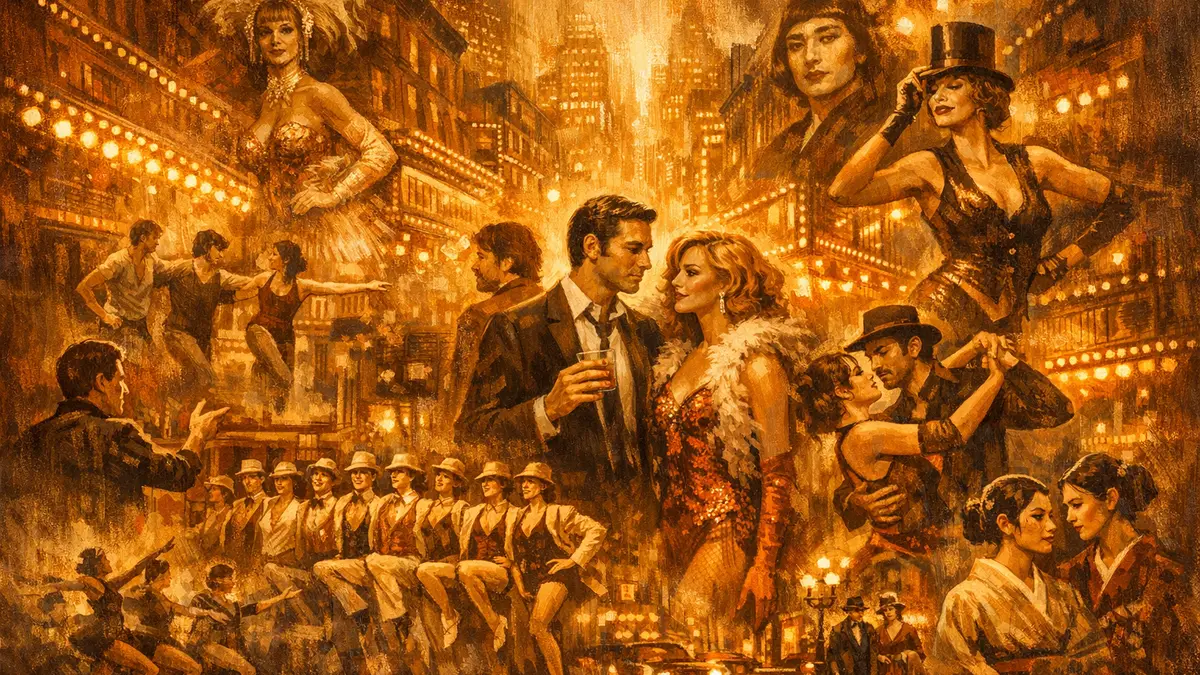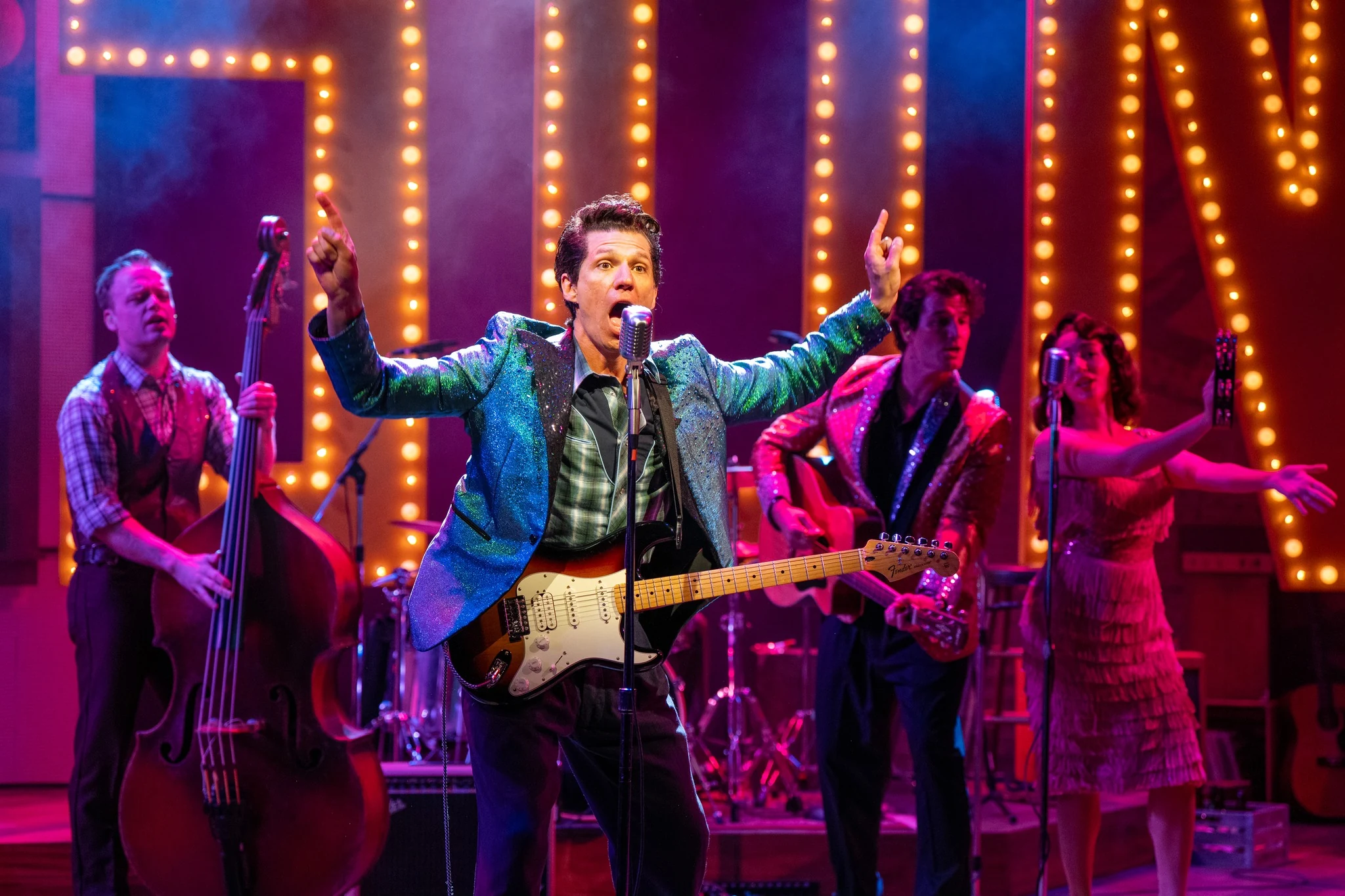

How Andrew Lloyd Webber, Cameron Mackintosh, and their collaborators transformed musical theater from intimate dramas into global blockbuster entertainment.
Picture Broadway in 1988. The lights dim at the Majestic Theatre, the overture swells, and a chandelier rises above the audience before crashing to the stage in a shower of sparks. Welcome to The Phantom of the Opera, not just a show, but a theatrical event designed to overwhelm your senses.
The British megamusical was a revolutionary approach that transformed Broadway from an artistic enclave into a global entertainment phenomenon. It turned musical theatre into large-scale, exportable spectacle, blending emotional storytelling, sung-through scores, technical wizardry, and instantly recognizable branding into a form that could travel across continents without losing its identity.
The Concept Musical Gives Way
To understand why megamusicals took over, we need to look at what came before. The early to mid-1970s saw the rise of [concept musicals](/articles/when-broadway-got-a-revolution-the-rise-of-the-concept-musical-in-the-1970s) like Stephen Sondheim's Company and Follies or Michael Bennett's A Chorus Line. These shows broke traditional narrative structures in favor of thematic explorations and psychological depth.
But by the late 1970s, both America and Britain were changing. Economic recessions hit hard. The idealism of the 1960s had faded. Audiences increasingly wanted escapism and emotional experiences rather than intellectual challenges.
"The concept musical was revolutionary, but it was also demanding," explains theater historian Jessica Sternfeld. "Producers saw opportunities for shows that could deliver more immediate emotional impact and spectacle."
Enter the British megamusical, a form that prioritized emotional storytelling on a grand scale, with technical wizardry that would redefine what was possible on stage. It did not erase the concept musical; it built on what the 1970s had already made possible, then amplified that ambition into global commercial theatre.
What Makes a Megamusical?
A megamusical isn't just a big musical. It is a specific theatrical form with distinct characteristics.
- Epic stories that adapt sweeping novels, historical events, or larger-than-life narratives and span years or decades.
- A sung-through format that eliminates spoken dialogue and keeps dramatic momentum moving through music.
- Unforgettable spectacle with at least one jaw-dropping technical moment, like a crashing chandelier, a helicopter landing, or a rotating barricade.
- Pop-influenced music that audiences can hum after leaving the theatre.
- Visual branding, from the Cats eyes to the Les Mis waif to the Phantom mask, that functions as a global identifier.
- Global replication rather than a one-city-only production model.
That last point matters. The megamusical is not just an artistic style. It is also a business model.
The Key Players Behind the Revolution
Andrew Lloyd Webber: The Hitmaker
Andrew Lloyd Webber became the definitive composer of the megamusical era. His genius lay in combining classical influences with pop sensibilities to create melodies that stick in your head after a single hearing.
From Jesus Christ Superstar (1971) to Cats (1981) and The Phantom of the Opera (1986), Lloyd Webber created shows with soaring ballads and dramatic themes that appealed to audiences regardless of their theatre experience. Songs like Memory and Music of the Night became hits outside the theatre, helping promote the shows worldwide.
"Lloyd Webber writes tunes that burrow into your memory instantly," says music director David Caddick. "That's why his shows could appeal to people who'd never seen theater before."

Cameron Mackintosh: The Global Producer
Producer Cameron Mackintosh transformed how musicals were created and distributed. Starting with Cats, he revolutionized theatrical production with a global business model.
- He created instantly recognizable logos and marketing for each show.
- He maintained identical productions across the world with strict quality control.
- He developed financing structures that supported decade-long runs.
- He treated musicals as global brands rather than one-off productions.
"Cameron didn't just produce shows," explains Broadway producer Kevin McCollum. "He created the modern business of global musical theater."

Boublil and Schonberg: The Storytellers
French composer Claude-Michel Schönberg and lyricist Alain Boublil created Les Misérables (1985) and Miss Saigon (1989), two of the most successful megamusicals. They specialized in adapting epic stories with emotional core narratives that resonated across cultural boundaries.
Their approach, combining historical sweep with personal drama, proved perfect for the megamusical format, creating shows that felt both epic and intimate simultaneously.

Trevor Nunn and John Napier: The Visual Team
Director Trevor Nunn and designer John Napier created the distinctive visual language of early megamusicals. From the immersive junkyard of Cats to the rotating barricades of Les Misérables, they developed theatrical environments that supported the emotional intensity of the music.
Nunn brought classical directing techniques from his work at the Royal Shakespeare Company, while Napier designed sets that could transform instantaneously, creating the cinematic flow that became a megamusical hallmark.
The Big Four: Landmark Megamusicals
Four shows defined the megamusical phenomenon.
"Cats" (1981): The Unexpected Hit
A musical about cats based on T.S. Eliot poetry sounds like an unlikely blockbuster, but Cats ran for 21 years in London and 18 years on Broadway. With its immersive junkyard set, spandex-clad dancers, and memorable Memory, it proved that spectacle and song could overcome even the thinnest plot.
"Cats" worked because it was a complete theatrical experience," says original cast member Elaine Paige. "It wasn't about following a story - it was about being transported to another world."
The show introduced the megamusical marketing model, with its yellow eyes logo appearing on merchandise worldwide.
"Les Miserables" (1985): Revolution and Redemption
Victor Hugo's massive novel about justice and redemption in 19th-century France became the perfect megamusical vehicle. With its rotating barricade, epic scope, and emotionally charged songs like I Dreamed a Dream and One Day More, Les Misérables proved that serious themes could succeed in spectacular form.
Originally developed in French, producer Cameron Mackintosh reimagined it for the English-speaking world, creating a global phenomenon that has played in 52 countries and 22 languages.
"What makes Les Mis special," explains original Jean Valjean Colm Wilkinson, "is that these huge historical events are always grounded in human stories of love and sacrifice."
"The Phantom of the Opera" (1986): Gothic Romance Writ Large
Andrew Lloyd Webber's adaptation of the classic novel about a disfigured musical genius obsessed with a beautiful soprano represents peak megamusical. Its crashing chandelier, underground lake, and lush romantic score set new standards for theatrical spectacle.
Phantom became Broadway's longest-running show until closing in 2023 after 35 years, and has been seen by over 145 million people worldwide. Its iconic mask logo is perhaps the most recognizable theatrical image in existence.
The show perfectly balances spectacle with emotional storytelling, creating a beauty-and-beast love story within a framework of theatrical magic.
"Miss Saigon" (1989): Vietnam Tragedy and Controversy
Following Les Misérables, Boublil and Schönberg adapted Puccini's Madama Butterfly to the Vietnam War. The show's famous helicopter scene, where a full-sized helicopter appears during the fall of Saigon, exemplified megamusical technical ambition.
While commercially successful, Miss Saigon has been justifiably criticized for its problematic representations of Asian characters, perpetuation of stereotypes, and its white savior narrative. The original production sparked protest when white actor Jonathan Pryce was cast as the Engineer, a Eurasian character, wearing prosthetics to alter his appearance, a practice of yellowface that reinforced harmful theatrical traditions.
"The show's depiction of Vietnamese women as sexual commodities and its oversimplification of a complex historical event raised important questions about representation," explains theater scholar Donatella Galella. "These criticisms force us to examine how Western theater portrays Asian narratives and characters."
More recent productions have addressed some of these issues by casting Asian actors in Asian roles, but the show's fundamental narrative problems remain. Miss Saigon represents both the technical heights of the megamusical and the cultural blind spots that plague many Western portrayals of non-Western stories.
Technical Spectacle: How They Did It
Megamusicals revolutionized theatrical technology with innovations like:
- Automated scenery: Computer-controlled systems moved massive set pieces with precision, enabling seamless scene changes without traditional blackouts.
- Computerized lighting: New control systems allowed for complex light cues that could transform environments instantly and highlight emotional moments.
- Hydraulic engineering: Custom systems created signature moments like the Phantom's boat sequence and Miss Saigon's helicopter landing.
- Environmental design: Shows like Cats transformed entire theaters into immersive environments, blurring the line between stage and audience.

This approach actually represents an essential bridge between concept musicals and megamusicals. Concept shows like Company and A Chorus Line had already begun experimenting with environmental staging and minimalist designs that engaged audiences in new ways. Cats took that [concept-musical innovation](/articles/when-broadway-got-a-revolution-the-rise-of-the-concept-musical-in-the-1970s) and amplified it to spectacular proportions, showing how the megamusical movement built upon rather than simply replaced its artistic predecessors.
These technical achievements weren't mere gimmicks. They integrated with storytelling to create unified theatrical experiences that audiences couldn't get from movies or television.
The Global Impact
The megamusical's most significant legacy is how it transformed musical theatre into an international industry.
- Worldwide expansion: Megamusicals introduced Broadway-style theatre to countries with little previous exposure, building new audience bases in Asia, South America, and beyond.
- Tourism driver: Shows like Phantom and Les Mis became tourist destinations themselves, influencing theatre district economics in major cities worldwide.
- New production model: The identical global production approach created a template for how shows could be replicated internationally while maintaining quality control.
- Performer training: The specific demands of megamusicals shaped performer training, creating specializations like swing performers who could play multiple roles.
- Commercial integration: Megamusicals pioneered the integration of merchandise, cast recordings, and brand extensions that are now standard practice in theatre.
The megamusical transformed Broadway from an American cultural institution to the center of a global entertainment industry that spans continents and cultures.
Frequently Asked Questions
Frequently Asked Questions
What is a megamusical?
A megamusical is a large-scale musical production characterized by epic storytelling, sung-through scores, technical spectacle, iconic marketing, and global distribution. These shows typically run for many years or even decades.
Why were most megamusicals British rather than American?
The British origin reflected several factors: European opera influence, London's centralized theatre district, different funding models, and the specific talents of creators like Andrew Lloyd Webber and Cameron Mackintosh.
How is a megamusical different from a concept musical?
Concept musicals like Company or A Chorus Line prioritize ideas and themes over traditional narrative, often with fragmented structures. Megamusicals embrace emotional storytelling, spectacle, and accessible melodies while maintaining traditional narrative structures, usually on an epic scale.
Do megamusicals still exist today?
While the classic megamusical era peaked in the early 1990s, its influence continues in shows like Wicked, The Lion King, and Hamilton, productions that combine spectacle with sophisticated storytelling and global appeal. Today's musicals often blend megamusical elements with more contemporary influences.