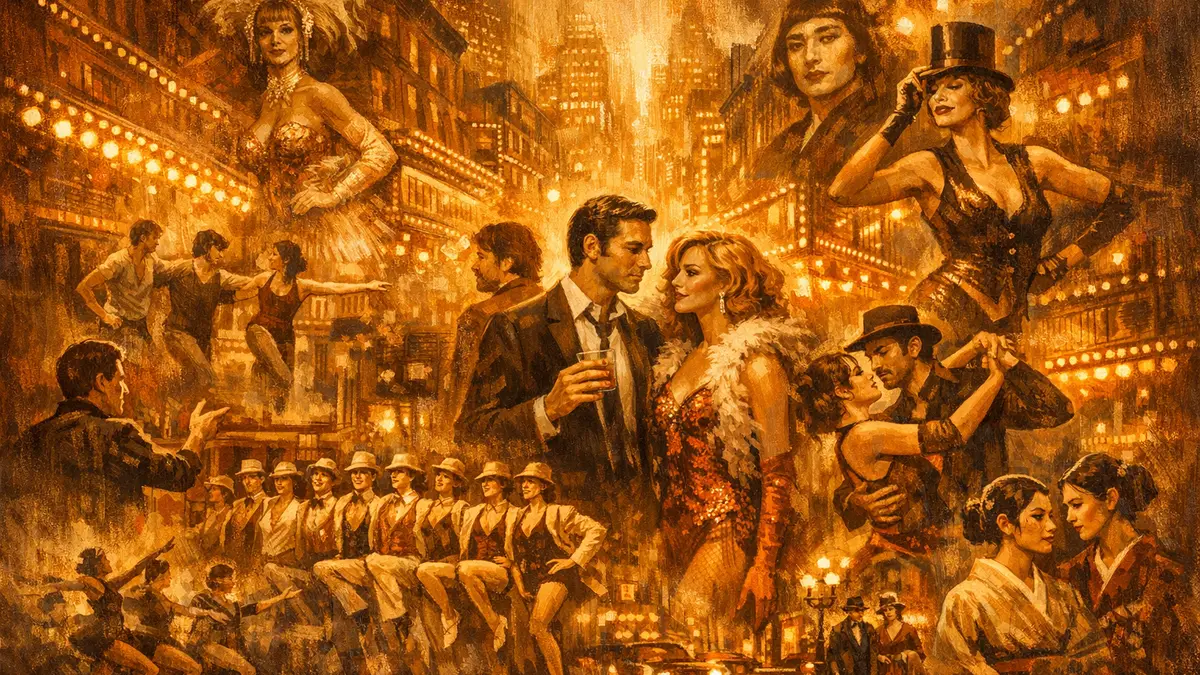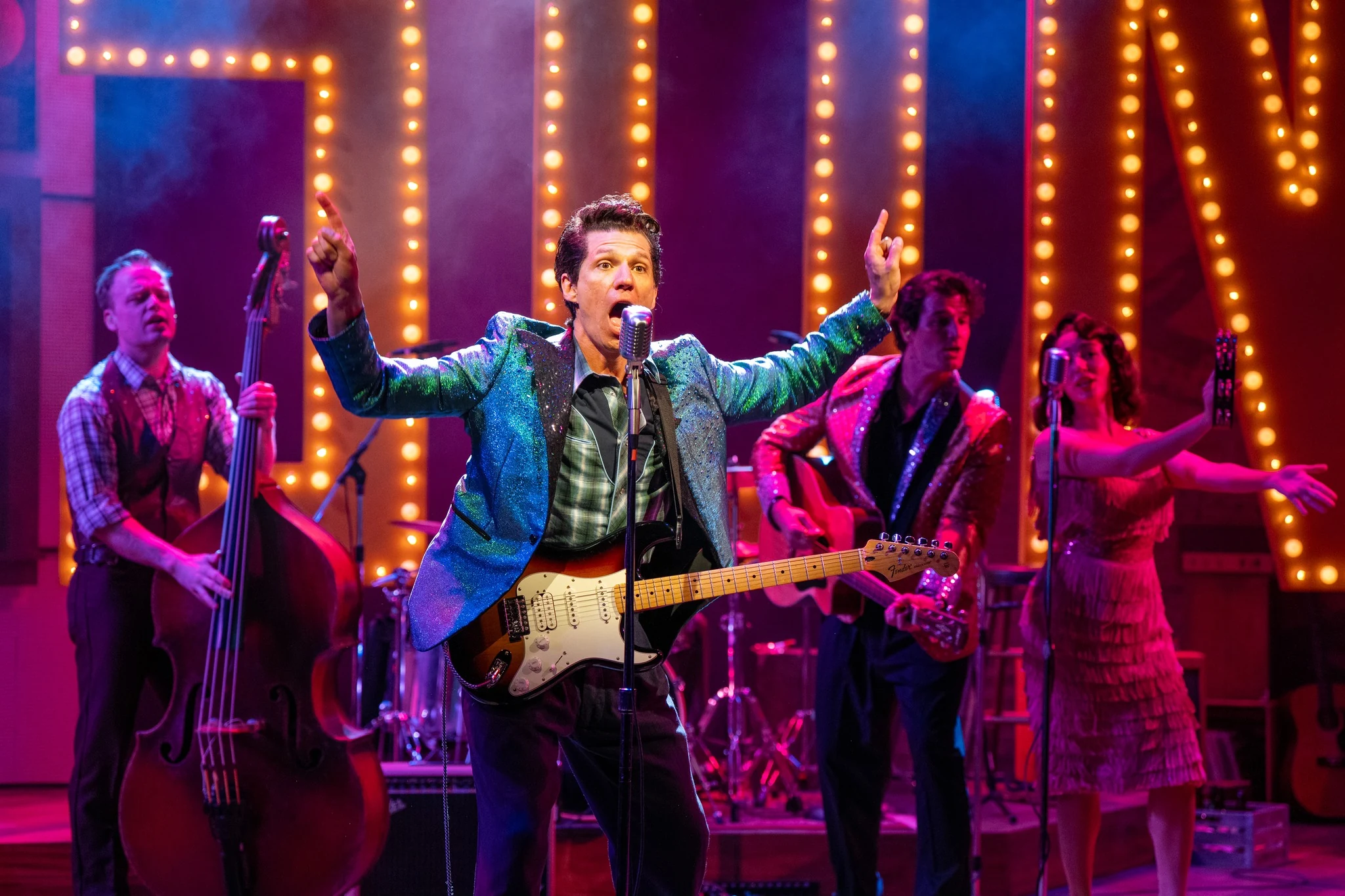

The 1980s did not revive the movie musical by returning to the old form. It rebuilt the genre through MTV rhythm, youth culture, performance-driven storytelling, and a new understanding that film properties could later become theatrical brands.
By the end of the 1970s, the traditional movie musical looked exhausted. The 1980s took a different path forward: not polished studio-pageant elegance, but pop soundtracks, fast-cut image culture, stylized lighting, and stories about ambition, rebellion, identity, and performance.
What emerged was not a simple comeback. It was a new relationship between Hollywood and Broadway, one in which films could carry theatrical DNA, films could be designed with stage adaptation in mind, and songs could do structural work again instead of serving as decorative pauses.
- MTV changed musical grammar by normalizing rapid editing, fashion-forward imagery, and song-led sequences.
- Films increasingly revealed their stage potential, creating a stronger pipeline from screen to Broadway.
- Youth-centered narratives gave the musical a new cultural position, tying performance to identity, aspiration, and rebellion.
Those shifts are why the decade matters. The 1980s did not just produce hits; it established a durable entertainment model that still shapes movie musicals, stage adaptations, and the broader logic of cross-platform storytelling.
When Film and Theatre Started Talking Back to Each Other
Earlier eras were defined largely by Broadway-to-Hollywood adaptation. The 1980s made that exchange feel more fluid. Fame, Footloose, and Hairspray all reveal a new pattern: films that were not originally stage works began carrying theatrical bones strong enough to migrate backward into Broadway.
That mattered because it changed how entertainment properties were valued. A musical was no longer only a discrete film or stage object. It was becoming reusable intellectual property with a life across media.
This was also a commercial shift. Unlike the more auteur-driven experimentation of the 1970s, the 1980s embraced a clearer alignment between art and marketability. Properties were built around stronger emotional arcs, more accessible music, and characters whose stories could migrate across formats without losing their appeal.
By the end of the decade, that strategy felt like a blueprint. The current landscape of stage-to-screen, screen-to-stage, live television events, streaming spin-offs, and branded adaptation owes a great deal to the logic the 1980s helped normalize.

MTV Rewrites Musical Film Grammar
When MTV launched in 1981, it altered audience expectations almost immediately. Music was no longer just heard. It was inseparable from montage, stylized lighting, fashion, body language, and rapid cutting. Musical sequences could now behave like emotional events rather than conventional set pieces.
This shift affected film structure itself. Narrative loosened. Atmosphere became more aggressive. Editing rhythms began following songs rather than dramatic realism. For scenic designers, it is a useful reminder that visual language changes when the dominant media form changes.
MTV also changed the audience. Viewers increasingly expected music and image to work together as a heightened sensory experience. It was no longer enough for a song to advance the plot. A musical moment had to feel visually authored, emotionally charged, and immediately legible.
That expectation pushed films toward bolder production design, stronger lighting signatures, more stylized framing, and a heightened relationship between performance and camera. In practical terms, the musical number became less like a preserved stage event and more like a self-contained image system.

The Films That Reset the Form
Fame and the Performance Ensemble
Fame grounded musical storytelling in artistic labor rather than fantasy. Its ensemble structure, urban realism, and multi-disciplinary performance model offered a different kind of musical film: less polished dream factory, more cultural document of ambition and strain.
That mattered because earlier musical traditions often centered fantasy, romance, or star charisma. Fame reoriented the form around training, competition, economic precarity, and the discipline behind performance. It made artistic aspiration feel collective, exhausting, and socially grounded.
The film's mix of dance, music, acting, and classroom observation gave it a documentary-like authority. It also made the musical feel less sealed off from the world outside the stage door, which is one reason the film still reads as a key bridge between prestige realism and performance spectacle. Its afterlife in arts education culture only reinforces that legacy.
Flashdance and the Music Video Sequence
Flashdance is one of the clearest examples of MTV aesthetics overtaking musical storytelling. Its emotional logic often lives in image, momentum, and performance texture more than in traditional dramatic continuity. The blue-collar aspiration story also mattered: the film linked performance with self-reinvention and mobility.
The most famous sequences work like music videos inside a feature film. Jennifer Beals' iconic performance image, the soundtrack's pop force, and the film's emphasis on motion over dialogue all helped prove that musicals could be commercially massive without looking like classical stage adaptations. Its huge box-office success confirmed that the musical could be retooled for the MTV era without losing mass appeal.
That combination of spectacle and upward longing became one of the decade's most durable formulas. It also showed how 1980s musical cinema could be both emotionally direct and highly marketable, with a soundtrack strong enough to function as a parallel product.
Footloose and Dance as Rebellion
Footloose translated culture-war tension into movement. Dance became not just entertainment, but a symbol of release, freedom, and generational resistance. That is part of why the film later adapted so easily to the stage. Its conflict is already theatrical in shape, even before it sings.
The film also captures something central to the period: performance as argument. Movement is not decorative here. It is a response to moral restriction, a way of turning private frustration into public form. That theatricality is exactly what made the material so legible as a stage musical.
Seen in the broader context of the decade, Footloose is really about cultural conflict expressed through bodies in motion. The movie's eventual Broadway life confirmed that 1980s films could be built with an eye toward later reinvention.
Little Shop and the Off-Broadway-to-Film Pipeline
Little Shop of Horrors revealed that eccentric, genre-blending theatrical material could survive mainstream film adaptation without losing its bite. Horror, comedy, puppetry, romance, and musical theatre all coexisted in one package. That hybridity feels modern now, but the 1980s made it commercially visible.
It also foregrounded a tension that runs through the whole decade: the negotiation between theatrical weirdness and commercial packaging. Little Shop keeps enough Off-Broadway personality to feel distinctive, but it is also polished for a broader audience. That balancing act becomes a recurring feature of later musical adaptation culture.
The film's production history also points to a key 1980s truth: musical works could be treated as adaptable IP with multiple possible endings, multiple audiences, and multiple release strategies. The famous alternate ending, and its later restoration in the 2019 director's cut, shows how even a single musical property could be revised to fit different market logics. That flexibility is part of why the decade mattered so much.
John Waters, Hairspray, and the Broader Sensibility Shift
Hairspray matters because it shows how subcultural film language could migrate into mainstream musical theatre. John Waters brought camp, satire, outsider protagonists, and social commentary into a shape that Broadway later found commercially irresistible.
The film is not a stage musical yet, but the adaptation logic is already there: a vivid world, a buoyant score waiting to happen, a protagonist built for audience identification, and a social frame larger than the romance plot.

Its later life on Broadway confirms how significant that shift was: Hairspray became a 2002 Broadway hit, then a 2007 musical film adaptation, and later a 2016 live television event. The film demonstrates that the 1980s were not only reinventing screen musicals. They were also expanding the kinds of stories, bodies, tones, and political attitudes that could eventually be absorbed into mainstream musical theatre.
Expanding Theatrical Boundaries
The 1980s also saw other films help widen the emotional and aesthetic range of musical storytelling. Polyester introduced camp excess and sensory provocation, Victor/Victoria explored gender performance and identity, and Purple Rain made personal mythology feel like a legitimate musical frame.
Together, those films showed that the musical could hold satire, queer self-fashioning, celebrity persona, and social critique without collapsing. They created the cultural conditions for later Broadway work to feel less rigid about who could lead a musical and what a musical could be about.
Menken, Ashman, and the Disney Turn
Alan Menken and Howard Ashman are among the most important bridge figures in the entire period. Their work reconnected film with Broadway craft, but in a way calibrated for contemporary screen storytelling. Songs once again became structural, character-driven, and dramatically legible.
Their importance is not just that they wrote memorable songs. They restored a clear dramaturgical function to musical numbers. Desire, conflict, villainy, comic expansion, and emotional release all became legible through song structure again, which made later adaptation from animation to stage feel almost inevitable.
They also brought back classic Broadway mechanics like the 'I Want' song and the villain anthem, but used them in a cinematic register. That blend made Disney's late-1980s and early-1990s output feel both nostalgic and newly commercial.
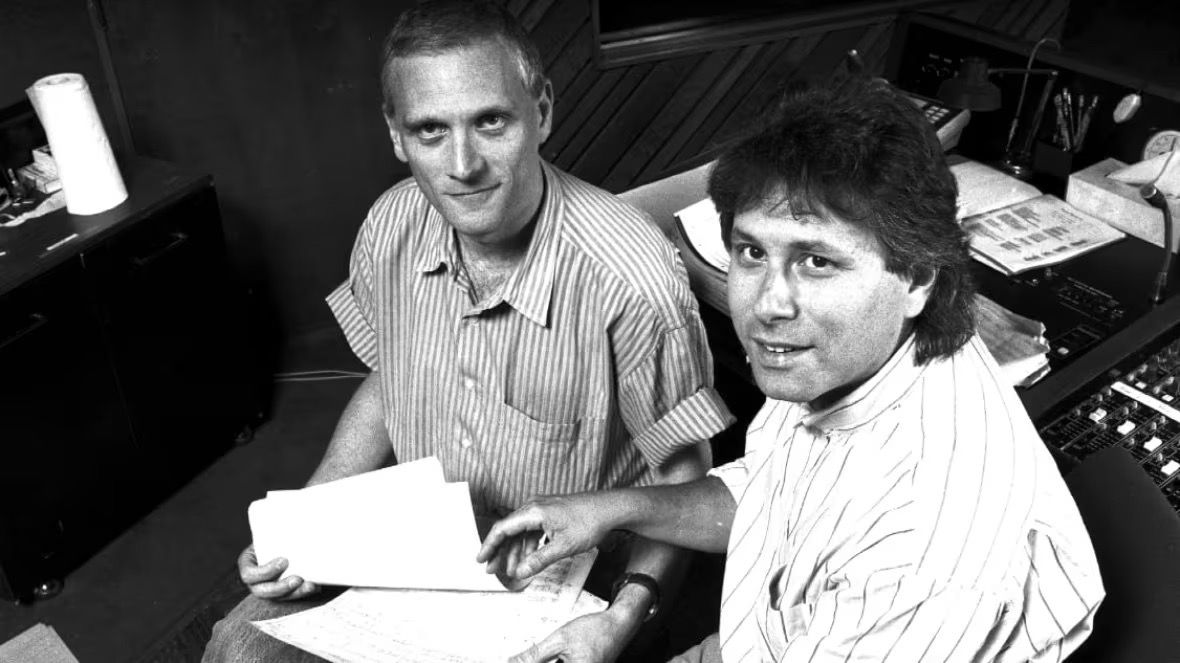
The Little Mermaid is a decisive turning point because it crystallizes that new system. It proves that musical storytelling could feel sincere, character-centered, and commercially dominant again. Disney's later Broadway empire grows out of this exact convergence.
That convergence is one of the decade's biggest legacies. The Little Mermaid closes the 1980s by revealing a full entertainment ecosystem in embryo: theatrical songwriting craft, corporate strategy, cinematic polish, and the latent possibility of later stage adaptation all operating at once.

Bob Fosse at the Edge of the Transition
Bob Fosse's death in 1987 feels symbolic within this story. He represents an earlier era of choreographic authorship, psychological fragmentation, and formal daring, yet his visual intelligence also points forward to the more fractured, image-driven musical culture of the MTV age.
In that sense, Fosse functions as both endpoint and bridge. His work belongs to a different musical era, but his sensitivity to fragmentation, control, erotic tension, and psychological performance helped prepare audiences and artists for the more aggressively authored image culture that followed.
All That Jazz is the clearest reminder of that legacy. Even as the decade moved toward pop polish and youth branding, Fosse's precision and self-scrutinizing style remained a touchstone for artists who wanted musical movement to carry psychological weight.

Why the 1980s Still Matters
The 1980s did not simply modernize the movie musical. The decade created the template for the current entertainment ecosystem: properties that move between stage and screen, musical sequences shaped by music-video logic, stories aimed at youth identity, and spectacle designed for replication across platforms.
That is why the decade matters beyond nostalgia. It helps explain Disney theatrical dominance, jukebox musical logic, the power of adaptation branding, and the expectation that musical storytelling should work simultaneously as narrative, image system, and cultural product.
Seen alongside [the British megamusical](/articles/when-broadway-got-spectacular-the-rise-of-the-british-megamusical), the decade also reveals how spectacle and branding were evolving across stage and screen at the same time.
Seen this way, the 1980s are less a detour and more a hinge. The decade stands between the collapse of one musical tradition and the emergence of the contemporary model, where theatre, film, television, streaming, branding, and live performance all circulate through the same musical imagination.
Frequently Asked Questions
How did MTV influence 1980s musical films?
MTV normalized fast-cut editing, heightened atmosphere, and music-driven visual storytelling. Films began treating musical moments like emotional image events rather than only conventional stage-style numbers.
Why did so many 1980s films later become Broadway musicals?
Many of these films already had theatrical bones: strong character arcs, performance-centered plots, built-in music identity, and a clear emotional structure that could translate to the stage.
What role did Menken and Ashman play in this transition?
They restored Broadway-style structural songwriting to mainstream screen storytelling, bringing back the 'I Want' song, villain songs, and emotionally functional musical numbers that made later Disney stage adaptations feel natural.
Why is Fame so important in this history?
Fame made artistic labor central to the musical film. Its ensemble structure, documentary-like realism, and multi-disciplinary performance model helped move the genre away from pure fantasy and toward a more grounded, contemporary idiom.
Why is Flashdance such a landmark?
Flashdance proved that music-video aesthetics, pop soundtrack logic, and dance-driven emotional storytelling could produce a massive commercial hit. It made the musical feel fully compatible with MTV-era image culture.
How did Footloose reflect the politics of the decade?
Footloose turned dance into an argument about freedom, morality, and generational conflict. Its story of movement against restriction captured the culture-war tension that shaped so much of the 1980s.
What did John Waters contribute to musical theatre's future?
Waters introduced camp, outsider protagonists, satire, and social critique into a form Broadway could later package and mainstream. Hairspray shows how 1980s subcultural cinema opened the door to more inclusive musical storytelling.
Why was The Little Mermaid a turning point?
The Little Mermaid showed that Broadway craft and studio strategy could align inside a commercial animated feature. Its song structure, emotional sincerity, and adaptation potential became a model for Disney's later theatrical empire.
How does Bob Fosse fit into this story?
Fosse marks a transition point. His precise, psychologically charged choreographic language belongs to an earlier era, but it helped prepare audiences for the more authored, fragmented, image-forward musical style that followed.