A portfolio should function like a curated production document, not a random gallery. For scenic designers, structure and language determine whether the work is discoverable, credible, and easy to hire from.
But here's the thing: having a portfolio website isn't enough. It needs to be discoverable, fast, accessible, and structured in a way that both human visitors and search engines can understand. This guide walks you through the essential elements of building a modern theatrical design portfolio that actually works.
Why Your Portfolio Needs a Strategy
Most theatrical designers throw up a website with some photos and call it a day. But a strategic portfolio does more than display images—it tells the story of your creative process, demonstrates your range, and makes it effortless for directors and producers to envision working with you.
Think of your portfolio as a curated exhibition, not a storage locker. Every project you include should serve a purpose. Every page should guide visitors toward understanding your unique value as a designer.
Site Structure: The Foundation of Discoverability
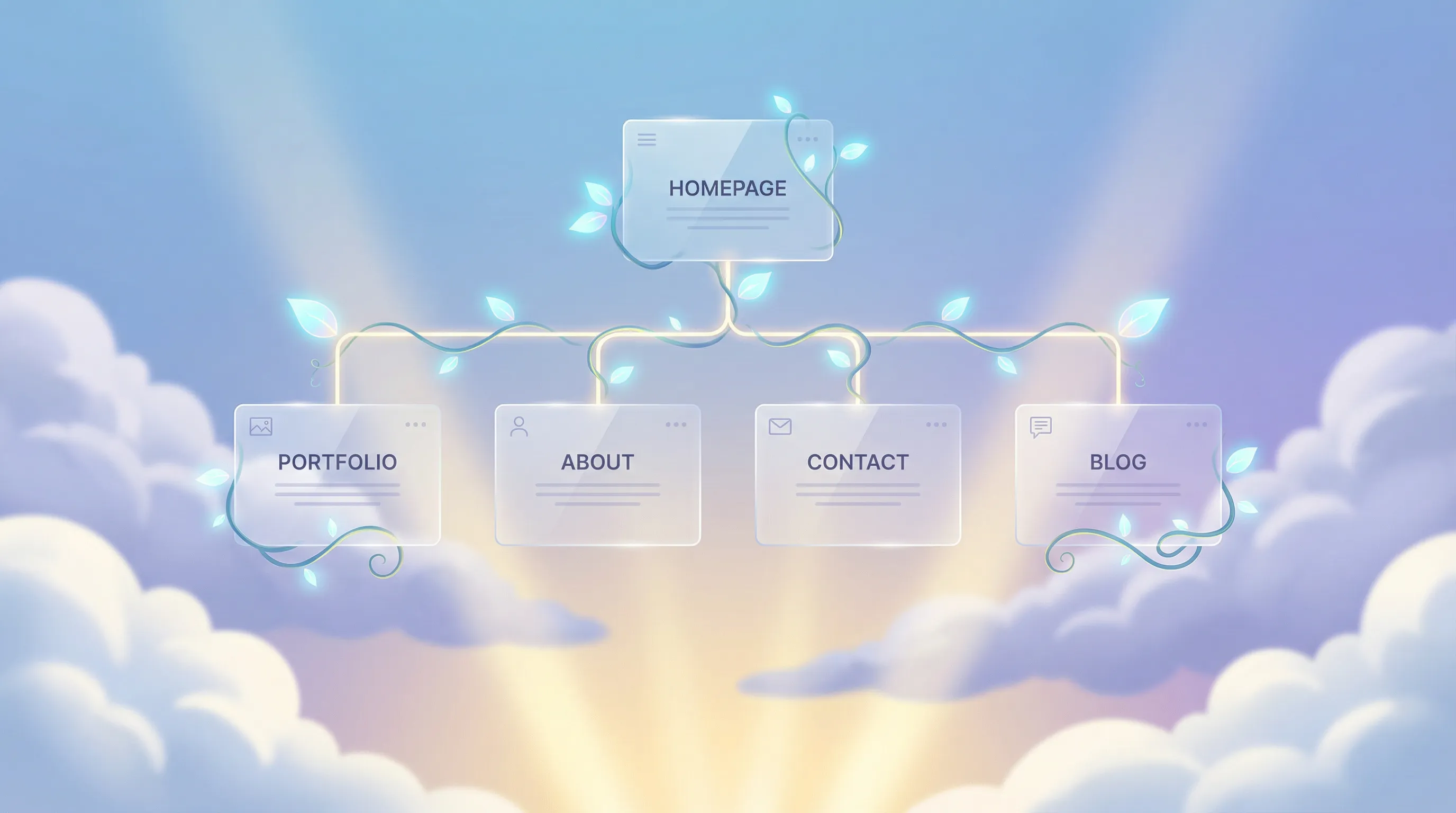
Search engines like Google rely on clear site architecture to understand and rank your content. A flat, well-organized structure helps both crawlers and human visitors find what they need quickly.
Essential Pages Every Theatre Portfolio Needs
- Homepage with a clear value proposition and featured work
- Portfolio/Projects page organized by category (scenic, lighting, costume, etc.)
- Individual project pages with detailed descriptions, process photos, and credits
- About page with your background, training, and creative philosophy
- Contact page with multiple ways to reach you
- Resume/CV page with downloadable PDF option
- News or blog section for updates, press coverage, and industry insights
URL Structure Matters
Clean, descriptive URLs help search engines understand your content. Instead of /project/12345, use /projects/glass-menagerie-scenic-design. This tells Google exactly what the page is about before it even reads the content.
SEO Fundamentals for Theatre Portfolios
Search Engine Optimization (SEO) might sound like marketing jargon, but it's simply the practice of making your website easier for search engines to find and understand. For theatrical designers, good SEO means showing up when someone searches for 'scenic designer San Diego' or 'theatrical set design portfolio.'
Writing Effective Alt Text for Design Images
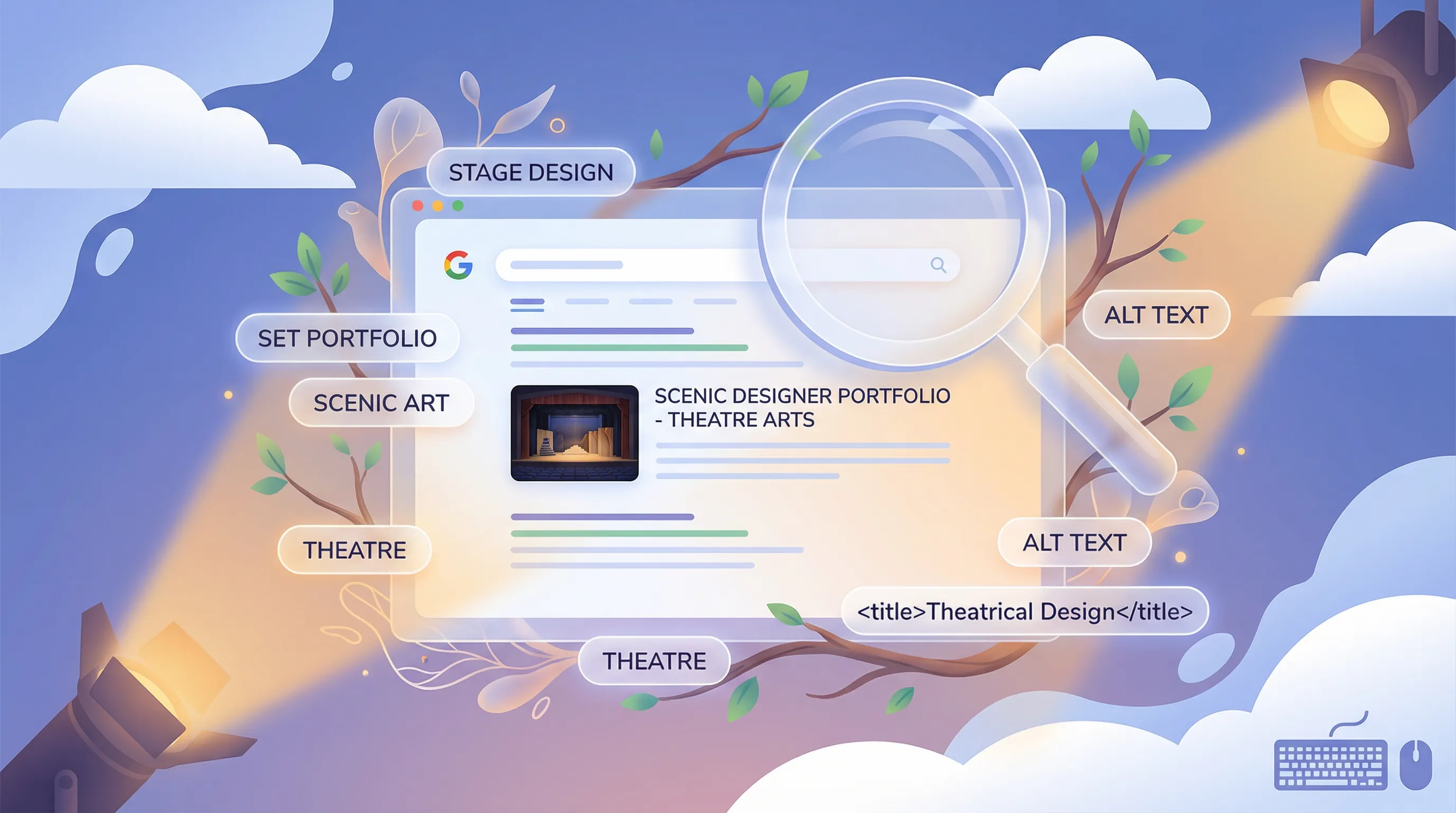
Alt text serves two critical purposes: it makes your images accessible to visually impaired visitors using screen readers, and it helps search engines understand what your images show. For theatrical design portfolios, this is especially important because your work is inherently visual.
Tools like ChatGPT can help you draft descriptive alt text quickly. Describe the scene, the design elements, and the production context. For example: 'Scenic design for The Glass Menagerie featuring a translucent apartment set with fire escape, designed by Brandon PT Davis for South Coast Repertory, 2025.'
Meta Descriptions and Title Tags
Every page on your site should have a unique title tag and meta description. The title tag appears in browser tabs and search results. The meta description is the snippet of text below the title in search results. Both should include relevant keywords naturally—don't stuff them.
Structured Data: Speaking Google's Language
Structured data (also called schema markup) is code you add to your website that helps search engines understand your content in a more detailed way. For theatrical designers, this can include information about your creative works, your professional profile, and your articles.
The most relevant schema types for theatre portfolios include Person (for your about page), CreativeWork (for individual projects), Article (for blog posts), and FAQPage (for FAQ sections like the one at the bottom of this article). You can learn more about implementing structured data at Schema.org.
Structured data doesn't directly boost your rankings, but it can earn you rich snippets in search results—those enhanced listings with star ratings, images, or FAQ dropdowns that dramatically increase click-through rates.
Content Strategy: Beyond the Portfolio Grid
A portfolio grid of beautiful production photos is essential, but it's not enough to drive consistent traffic. Adding a content layer—articles, tutorials, news updates—gives search engines fresh content to index and gives visitors reasons to return.
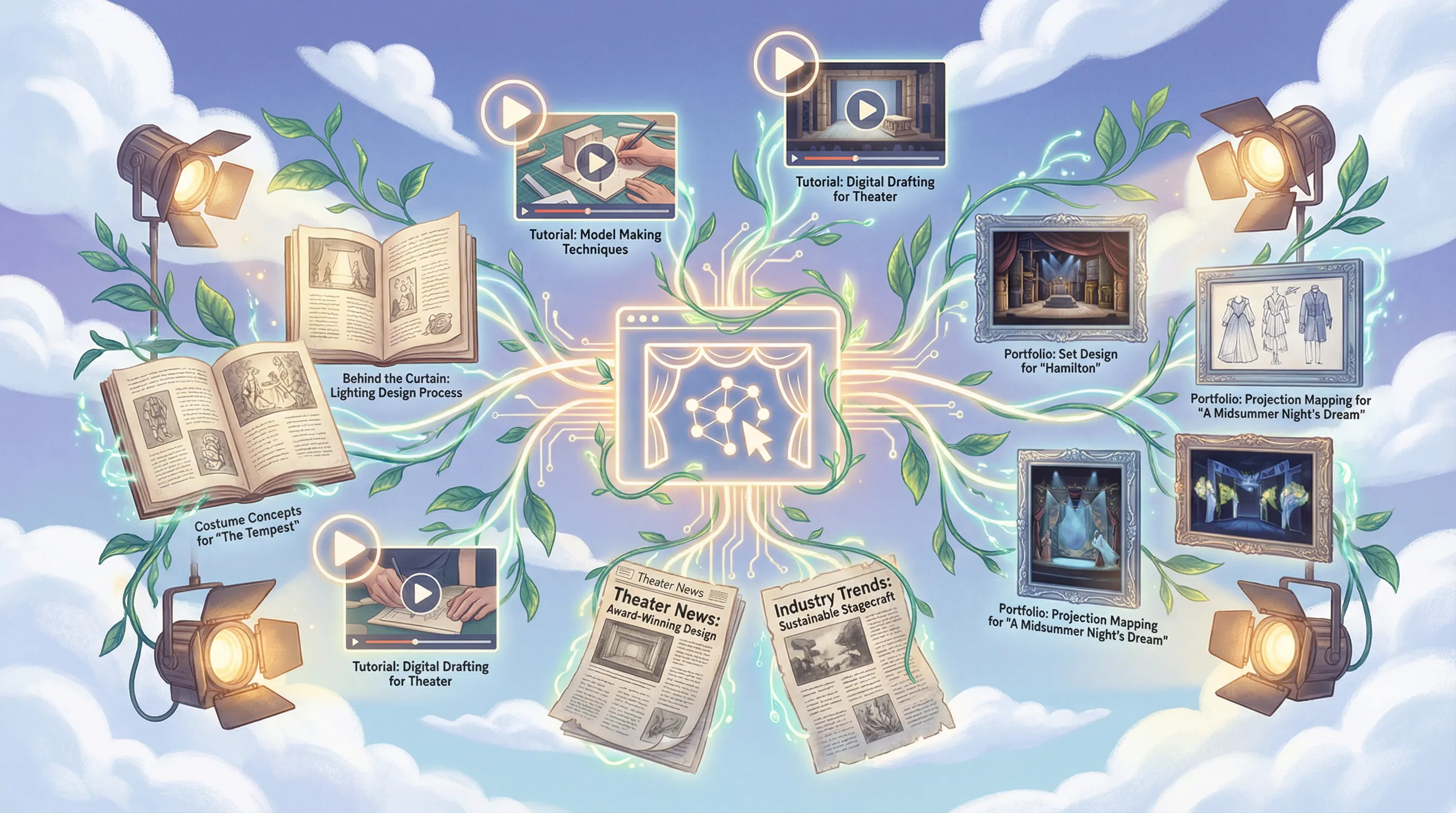
On a working portfolio site, that usually means giving your Projects, About, Resume, Contact, and Articles pages distinct jobs instead of letting them blur together.
Write about your design process. Share lessons learned from challenging productions. Discuss industry trends. Review tools and software you use. This kind of content establishes you as a thought leader and creates multiple entry points for people to discover your work through search.
Performance and Accessibility
A beautiful portfolio that takes 10 seconds to load is a portfolio nobody sees. Google uses page speed as a ranking factor, and visitors expect near-instant loading. Optimize your images, use modern formats like WebP, and choose a hosting platform that delivers fast load times.
Accessibility isn't just the right thing to do—it's also good for SEO. Proper heading hierarchy, descriptive alt text, keyboard navigation, and sufficient color contrast all contribute to both accessibility and search engine understanding of your content.
Keeping Your Portfolio Current
An outdated portfolio signals to both visitors and search engines that you're not actively working. Update your site regularly with new projects, fresh articles, and current news. Even small updates—like adding a new production photo or publishing a brief news item—signal to Google that your site is active and relevant.
Set a schedule: update your portfolio within two weeks of a production closing, publish at least one article per quarter, and review your site's analytics monthly to understand what content resonates with your audience.
Conclusion
Building a modern theatrical design portfolio is about more than showcasing beautiful work. It's about creating a discoverable, accessible, and strategically structured online presence that works for you around the clock. By implementing proper site architecture, SEO fundamentals, structured data, and a consistent content strategy, you transform your portfolio from a static gallery into a dynamic tool that attracts opportunities.
The theatrical design industry is increasingly digital. The designers who embrace this reality—and invest in their online presence—will be the ones who thrive in 2026 and beyond.