

The Bald Soprano
Stephens College · Comedy · 2022
Stephens College · Comedy · 2022
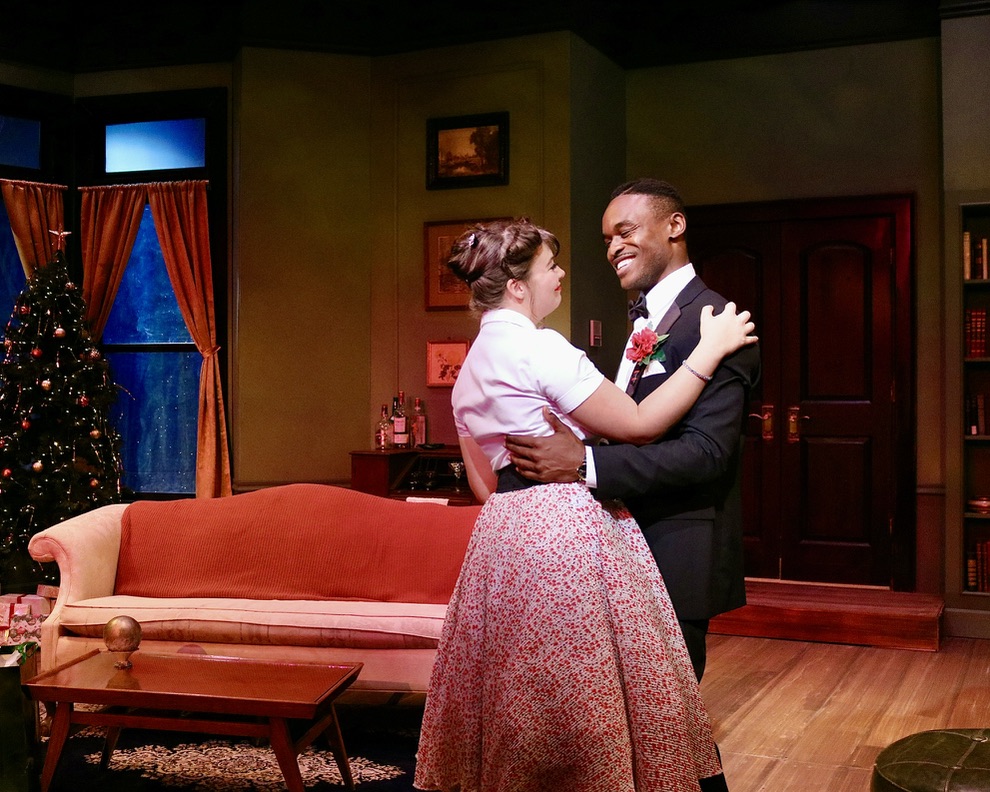
The Bald Soprano needed a domestic room that looked recognizable at first glance, then became less stable the longer the audience sat with it. At Stephens College, the scenic and lighting design treated the drawing room as a polite interior that could no longer support logic.
Because the play is built on repetition, interruption, and the collapse of language, proportion and composition became central. Furniture, architecture, and light leaned into distortion rather than strict realism.
Lighting worked as part of the architecture, sharpening awkward pauses and tonal shifts. The design let absurdity live in plain sight, inside a room still trying to behave as if everything were normal.


Because the play is built on repetition, interruption, and the collapse of language, proportion and composition became central. Furniture, architecture, and light leaned into distortion rather than strict realism.
Lighting worked as part of the architecture, sharpening awkward pauses and tonal shifts. The design let absurdity live in plain sight, inside a room still trying to behave as if everything were normal.






Portfolio guide
Ask Brandon’s portfolio